Layaway Deposits and an Abandoned Purchase
Money is paid over weeks, the goods stay in the shop, and then something changes. What happens to the payments already made is decided by a written agreement and, in several states, by a statute that says what that agreement has to contain.

The rule in short
Layaway is a sale where the buyer pays in installments and the seller holds the goods until the price is paid. Because no credit is extended and no finance charge is imposed, federal lending disclosure rules generally do not apply. Several states regulate layaway directly, requiring a written agreement covering the deposit, payment schedule, cancellation terms, storage of the goods and what is refundable. Elsewhere the contract terms govern.
Layaway is a sale in which the buyer pays over time and the seller holds the goods until the price is paid. What happens if the plan is abandoned depends on the written agreement, and in several states on a statute that dictates what the agreement must say.
The arrangement sits in an unusual legal position. It looks like credit and is not, because nothing is lent and nothing is delivered before payment. That means the federal credit disclosure regime generally does not apply, which is why the protections here are contractual and state-level rather than federal.
Why layaway is not treated as credit
Credit, in the sense the lending rules use, means the right to defer payment of a debt or to incur debt and defer its payment. Layaway defers delivery instead. The buyer pays in advance in stages, the seller hands nothing over until the end, and no debt exists that the buyer could be pursued for.
Where a plan does impose a finance charge, or where the seller delivers the goods and then collects the balance, the analysis changes and credit rules may apply. That is worth checking whenever a plan is described as layaway but involves taking the goods home, because the label on the program does not decide the question.
The consequence of falling outside the credit rules is that the buyer receives no standardized disclosure box, no stated annual rate, and no federally prescribed schedule of payments. Everything that would be mandatory in a credit agreement is here a matter of what the seller chose to write down. That is not a reason to avoid layaway, which for many households is a sensible way to buy something without borrowing. It is a reason to read the paperwork properly, because nothing else is doing that job.
What the written agreement has to cover
Several states regulate layaway directly, and their requirements follow a consistent pattern. The agreement must be in writing and given to the buyer, and it must identify the goods, the total price including any charges, the amount of the deposit, the schedule of payments, and the period over which the plan runs.
It must then deal with the difficult parts: what happens if a payment is missed, whether the seller may cancel and after how long, what service or cancellation charge may be retained, whether the balance is refunded in cash or as store credit, how the goods will be stored, and whether the specific item is set aside for the buyer. Some states also cap the fee a seller may keep and require the rest to be returned.
Where no state statute applies, the same list is still the right list; it simply has to be negotiated rather than assumed. A seller with a well-run program will already have written answers to all of it, and a seller that improvises when asked has revealed how the questions will be answered later.
The single most useful question at the start of a layaway plan is whether the exact item is being held or whether the seller has merely recorded an order for something of that description. It determines what happens if the model is discontinued, if the last one is sold to someone else, or if a price rises. A plan on a specific segregated item is a different and better arrangement from a plan on a category, and the agreement often does not say which one it is.
What happens when a plan is not completed
| Scenario | Usual outcome | Where the answer comes from |
|---|---|---|
| Buyer cancels voluntarily | Payments returned less a stated charge | The agreement, capped by state law where it applies |
| Payment missed, plan lapses | Seller may cancel after a stated period | The agreement's default and notice terms |
| Seller cancels without notice | Full refund usually due | State layaway rules and ordinary contract law |
| Item damaged or lost in store | Seller normally bears the risk as owner | The agreement, and state sales law on risk of loss |
| Seller stops trading | Buyer becomes a creditor for the payments | Insolvency law, with a capped consumer priority |
| Item discontinued mid-plan | Substitution or refund | Whether a specific item was set aside |
Fees, and what a seller may keep
Sellers commonly charge a service fee to open a plan and a cancellation fee to close one early, and both are lawful where disclosed. What is not lawful is inventing them afterwards. A fee not stated in the written agreement, or described differently from how it is applied, exposes the seller to the general prohibition on deceptive practices and to state consumer protection statutes.
Refunds as store credit rather than cash are the other recurring point. A number of state layaway rules require cash where the seller canceled, and permit credit where the buyer did. Where the agreement offers credit, it carries the same exposure as any other promise from that business, which is set out under store credit and posted refund policies.
If the seller fails before the plan finishes
This is the worst case and the reason layaway deserves more attention than it usually gets. The buyer has paid money for goods not yet delivered and does not own them. On an insolvency, the buyer becomes a creditor. Bankruptcy law gives individuals a capped priority for deposits made toward the purchase of goods or services for personal, family or household use where those goods were not delivered, which sits ahead of general unsecured claims and behind secured lenders. It is a limited protection rather than a recovery.
Paying by credit card improves the position materially, because the billing error procedure and the right to assert transaction claims and defenses against the issuer both become available, subject to their conditions. Paying cash into a plan running for months at a struggling retailer is the arrangement with the least protection of any discussed here, and it is the same structural exposure described under a gift card when the shop closes.
The practical checklist is short. Get the agreement in writing and keep it. Confirm whether the specific item is set aside. Establish what happens on a missed payment and what is refundable, before paying anything. Pay by card. And if the retailer starts announcing closures, finish the plan or ask for the money back that week, for the same reasons that apply to prepaid balances generally, including those discussed under gift card expiry and dormancy fees. Money already handed over is the one part of the transaction a buyer cannot get back by changing their mind about the shop.
Points to carry away
- Layaway defers delivery rather than payment, which is why it is not usually credit.
- Federal credit disclosure rules generally do not reach a genuine layaway plan.
- Several states require a written layaway agreement covering specified terms.
- Whether a deposit is refundable depends on the agreement and any state statute.
- Ownership normally stays with the seller until the final payment is made.
Questions readers ask
Who owns the goods while a layaway is running?
The seller normally retains ownership and possession until the price is paid in full, which is the defining feature of the arrangement. That matters if the goods are damaged, destroyed or stolen while in the store, since the risk usually sits with whoever owns them, and it matters if the seller fails, since the buyer's position is that of a creditor rather than an owner. A written agreement that says nothing about damage or loss has left out one of the more important terms.
What if the store discontinues the item before the plan finishes?
The agreement should say. Well-drafted plans commit the seller to segregating and holding the specific item, which removes the problem entirely. Where the seller only agreed to supply an item of that description, a discontinuation raises a substitution question and, if no acceptable substitute exists, a refund question. Buyers who care about a particular model should ask whether their item is physically set aside, because that answer determines what happens next.
Is layaway the same as buy now pay later?
No, and the difference is the direction of the risk. Layaway defers delivery: the buyer pays first and receives the goods at the end. Deferred payment products deliver the goods first and collect afterwards, which involves extending credit and brings different rules into play, potentially including credit disclosure requirements depending on how the product is structured. A shopper choosing between them is choosing who carries the risk if the arrangement is not completed.
Sources
- 12 CFR 1026.2 — Definitions and rules of constructionDefines credit and creditor, which is why a genuine layaway plan falls outside the lending rules.
- 15 U.S.C. 45 — Unfair or deceptive acts or practicesThe federal prohibition reaching misrepresented layaway terms or undisclosed fees.
- 16 CFR Part 233 — Guides against deceptive pricingFederal guidance on how the price a buyer is committing to may be represented.
- 16 CFR Part 435 — Mail, internet or telephone order merchandiseThe federal shipment timing and cancellation rule for goods ordered at a distance.
- 11 U.S.C. 507 — PrioritiesThe capped priority for consumer deposits toward goods not delivered if a seller fails.
- 15 U.S.C. 1666i — Claims and defenses against a card issuerAvailable where layaway payments were made with a credit card.
- 12 CFR 1026.13 — Billing error resolutionThe dispute procedure for card payments made toward an uncompleted purchase.
National Attorney Hub is a publication, not a law firm. This article states general rules and cites its sources; it is not advice about any particular case, and the law differs by state and changes over time.
More in Prices & Gift Cards
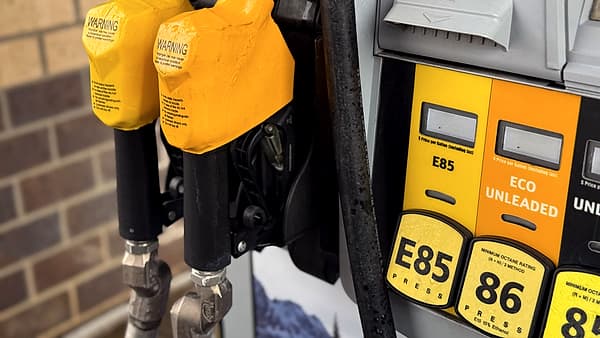
Fuel Pump Accuracy and the Octane Posted
Federal rules require retailers to post the automotive fuel rating on at least one label on each face of every dispenser, placed conspicuously near the price per gallon, and require every transfer to a non-consumer to be certified with a rating. The octane rating is the average of the research and motor octane numbers. Measurement accuracy is regulated by state weights and measures programs against a national technical standard, with devices tested and sealed.

Advertised Offers That Run Out
For retail food stores, offering products at a stated price by advertisement when the covered stores do not have them in stock and readily available during the advertised period is an unfair or deceptive act, unless the advertisement clearly discloses that supplies are limited or that the item is only at some outlets. Four defenses exist: adequate ordering, a rain check, a comparable substitute at the advertised price, or other compensation of at least equal value.

The Shelf Price Against the Price at the Checkout
There is no general federal rule requiring a store to charge the shelf price. Price accuracy is regulated by state weights and measures law, built on a national model that covers price verification and the method of sale, and enforced by state and county inspectors. Federal law reaches the subject through the prohibition on deceptive acts and practices, which bites where advertised prices are systematically not honored rather than where a single tag is stale.