Gift Card Expiry and Dormancy Fees
Two federal rules do most of the work on a gift card. One sets a floor under how long the money lasts. The other says a fee for doing nothing may only be charged after a full year of nothing, once a month, and only if the card said so.
The rule in short
Federal law prohibits selling a gift certificate, store gift card or general-use prepaid card with an expiration date unless the underlying funds last at least five years from issue or last load, with prescribed disclosures on the card. Dormancy, inactivity and service fees are barred unless there has been no activity for a year, the fee and its frequency are stated clearly on the card, and no more than one such fee is charged in any calendar month.
Federal law sets a floor under how long gift card money lasts and tightly limits fees for leaving it unused. The funds must survive at least five years from the day the card was issued, or from the last load, and an inactivity fee needs a full year of inactivity behind it.
Both rules are conditional rather than absolute, and the conditions are printed on the card. That is the practical takeaway: the smallest type on a gift card is the part that decides what happens to the balance, and it cannot be changed after the card is bought.
The five-year floor on the funds
No person may sell or issue a gift certificate, store gift card or general-use prepaid card with an expiration date unless three things are true. The issuer must have policies and procedures giving consumers a reasonable opportunity to buy a card with at least five years remaining until expiration. The expiration date for the underlying funds must be at least the later of five years after issue, or five years after funds were last loaded, or the card's own expiration date. And the required disclosures must appear on the card.
The distinction between the card and the funds is where most confusion lives. A piece of plastic may carry an earlier expiry than the money behind it, which is why the rules require a statement, in close proximity to the card expiration date and with equal prominence, explaining that the card expires but the funds either do not or expire later, and that a replacement can be requested. Replacing the card, or otherwise providing the remaining balance before the funds expire, must be free unless the card was lost or stolen.
When a fee for doing nothing is permitted
Dormancy and inactivity fees mean fees for non-use. A service fee means a periodic fee for holding or using the card. None of the three may be imposed unless every one of three conditions is met.
First, there must have been no activity for the one-year period ending on the date the fee is imposed. Activity means anything that increases or decreases the underlying funds, other than the imposition of a fee or an adjustment for an error or reversal. Second, the amount of the fee, how often it may be assessed and the fact that it may be charged for inactivity must be stated clearly and conspicuously on the card itself. Third, no more than one such fee may be imposed in any given calendar month.
Other kinds of fee are treated separately and are permitted with disclosure. Purchase fees, replacement fees for a lost or stolen card, balance inquiry fees and reload fees each have to be disclosed with the type of fee, the amount or how it is calculated, and the conditions under which it may be imposed. A toll-free number for obtaining fee information must appear on the card. The pattern throughout is the same: fees are allowed where they are disclosed before the card is bought, and not otherwise.
Because activity is anything that moves the balance, spending part of a card restarts the one-year inactivity period. A card with a balance left after a purchase is therefore protected for another year from the date of that purchase, and the five-year funds period on a reloadable card runs from the last load rather than from issue. Using a little of a card is the simplest way to keep it alive, and it costs nothing.
The categories the rules leave out
| Type of card | Covered by the federal rules? | What governs it instead |
|---|---|---|
| Store gift card bought for cash | Yes | The five-year floor and the fee conditions |
| General-use prepaid card sold as a gift | Yes | The same rules, with its own fee disclosures |
| Loyalty, award or promotional card | No | Its own terms, plus deception rules and state law |
| Reloadable card not marketed as a gift card | No | Other prepaid account rules and its own agreement |
| Paper-only certificate | No | State gift certificate law and contract terms |
| Card for admission to a particular venue | No | The venue's terms and state law |
State law, which frequently goes further
The federal rules are a floor, not a ceiling. Many states prohibit expiration on gift certificates altogether, ban dormancy fees outright rather than conditioning them, require cash redemption of small remaining balances, or bring paper certificates inside their scheme where federal law leaves them out. Several also treat unredeemed balances as unclaimed property after a period, which can allow a holder to claim the money from the state rather than the merchant.
Because of that, the practical order of questions is: what does the card say, what does federal law require, and what does the state where it was bought or is being used add. The last of those often produces the better answer, and it is the one people most often skip.
Where a card was bought in one state and used in another, the state whose law applies is not always obvious, and issuers frequently apply the most favorable available term rather than argue about it. Asking the issuer directly which state law it applies is a reasonable question and the answer is usually given without difficulty.
Handling a card that has been in a drawer
Check the balance first, using the number or website printed on the card, and note whether any fees have already been taken. Compare what was deducted against what the card discloses, since a fee charged more than once in a calendar month, or charged without a full year of inactivity, is not permitted. If the card has expired but the funds have not, ask for a replacement, which must be provided without charge unless the card was lost or stolen.
Where an issuer refuses, put the complaint in writing and keep the card and any packaging. A waiver of rights under these provisions is void, so wording in an issuer's terms that purports to give them up does not do so, and a private remedy exists for violations. Complaints also go to the federal consumer financial regulator and to the state attorney general.
Two neighboring situations are covered separately. If the retailer itself has stopped trading, the question becomes where a cardholder ranks among creditors, which is dealt with under a gift card when the shop closes. If the issue is a refund paid out as store credit rather than a gift card, the analysis follows store credit and posted refund policies. And where a card was bought as part of a promotion that turned out to be misdescribed, the reasoning under advertised offers that run out applies to the advertising rather than to the card.
Points to carry away
- The underlying funds must last at least five years from issue or from the last load.
- Buyers must have a reasonable opportunity to buy a card with five years remaining.
- An inactivity or service fee needs a full year of no activity before it may be charged.
- Only one dormancy, inactivity or service fee may be imposed in any calendar month.
- Replacing an expired card must be free unless the card was lost or stolen.
Questions readers ask
Which cards are outside these rules?
Several categories are excluded: cards usable solely for telephone services, reloadable cards not marketed or labeled as gift cards, loyalty, award and promotional gift cards, cards not marketed to the general public, cards issued in paper form only, and cards redeemable solely for admission to events or venues at a particular location or affiliated group, or for goods and services obtained in conjunction with such admission. A promotional card handed out free is therefore treated quite differently from one that was bought.
What has to be printed on the card itself?
The expiration date for the underlying funds, or a statement that the funds do not expire. A toll-free number and, where one exists, a website for obtaining a replacement after the card expires if the funds may still be available. And, unless a non-reloadable card carries an expiration at least seven years from manufacture, a statement disclosed with equal prominence and close to the expiration date explaining that the card expires but the funds do not, or expire later, and that a replacement can be requested.
Can the terms change after the card is bought?
No. The fees and the terms and conditions of expiration that must be disclosed before purchase may not be changed after purchase. That is a significant protection, because it means the card in a drawer is governed by what it said when it was bought rather than by whatever the issuer's current terms say. Keeping the packaging, or a photograph of the back of the card, preserves the evidence of what those terms were.
Sources
- 15 U.S.C. 1693l-1 — General-use prepaid cards and gift certificatesThe statutory prohibition on short expiration periods and on most dormancy fees.
- 12 CFR 1005.20 — Requirements for gift cards and gift certificatesThe implementing regulation with the definitions, exclusions, fee conditions and disclosures.
- CFPB — Regulation E section 1005.20The regulator's own published text of the gift card rule and its commentary.
- CFPB — Prepaid cards and prepaid accountsConsumer explanation of prepaid products and where gift cards sit among them.
- 15 U.S.C. 1693m — Civil liabilityThe private remedy available for violations of the electronic fund transfer provisions.
- 15 U.S.C. 1693l — Waiver of rightsMakes any waiver of rights under these provisions void.
- 15 U.S.C. 45 — Unfair or deceptive acts or practicesThe general federal prohibition reaching misleading gift card marketing.
National Attorney Hub is a publication, not a law firm. This article states general rules and cites its sources; it is not advice about any particular case, and the law differs by state and changes over time.
More in Prices & Gift Cards
Fuel Pump Accuracy and the Octane Posted
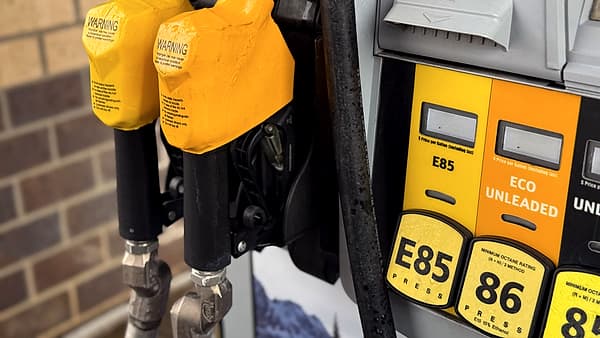
Federal rules require retailers to post the automotive fuel rating on at least one label on each face of every dispenser, placed conspicuously near the price per gallon, and require every transfer to a non-consumer to be certified with a rating. The octane rating is the average of the research and motor octane numbers. Measurement accuracy is regulated by state weights and measures programs against a national technical standard, with devices tested and sealed.

Advertised Offers That Run Out
For retail food stores, offering products at a stated price by advertisement when the covered stores do not have them in stock and readily available during the advertised period is an unfair or deceptive act, unless the advertisement clearly discloses that supplies are limited or that the item is only at some outlets. Four defenses exist: adequate ordering, a rain check, a comparable substitute at the advertised price, or other compensation of at least equal value.

The Shelf Price Against the Price at the Checkout
There is no general federal rule requiring a store to charge the shelf price. Price accuracy is regulated by state weights and measures law, built on a national model that covers price verification and the method of sale, and enforced by state and county inspectors. Federal law reaches the subject through the prohibition on deceptive acts and practices, which bites where advertised prices are systematically not honored rather than where a single tag is stale.