Advertised Offers That Run Out
The advertisement arrives on Sunday, the shelf is empty on Monday, and a clerk says there is nothing they can do. For food stores there is a specific federal rule about exactly that situation, and it lists the four answers a retailer is allowed to give.
The rule in short
For retail food stores, offering products at a stated price by advertisement when the covered stores do not have them in stock and readily available during the advertised period is an unfair or deceptive act, unless the advertisement clearly discloses that supplies are limited or that the item is only at some outlets. Four defenses exist: adequate ordering, a rain check, a comparable substitute at the advertised price, or other compensation of at least equal value.
For food stores there is a specific federal rule about advertised items that are not on the shelf. Offering products at a stated price by advertisement, when the stores covered by the advertisement do not have them in stock and readily available during its effective period, is an unfair or deceptive act.
The rule has an escape valve built into the sentence. It does not apply where the advertisement clearly and adequately discloses that supplies of the advertised products are limited, or that they are available only at some outlets. That single clause is why so many advertisements carry a line about limited quantities, and it is the first thing to read when an item is missing.
What the rule actually requires
Three elements have to be present. There must be an advertisement disseminated in an area served by the stores it covers. It must offer products for sale at a stated price. And those stores must not have the products in stock and readily available to customers during the period the advertisement is effective.
Readily available is doing quiet work. Stock sitting in a stockroom that nobody will fetch is not readily available, and neither is a display that was emptied on the first morning of a week-long promotion. The obligation runs across the effective period rather than being satisfied by having had some at the start.
The words in an area served by any stores which are covered by the advertisement matter too. An advertisement circulated across a region commits every store in that region unless it says otherwise. That is why the phrase about availability at some outlets exists, and why a shopper who drove to a smaller branch should check what the advertisement said about which stores it applied to before assuming the rule was broken.
The four defenses a retailer may rely on
No violation is found where any one of four things is true. The first is ordering: the advertised products were ordered in adequate time for delivery, in quantities sufficient to meet reasonably anticipated demand. This is the defense that looks at the retailer's planning rather than at the outcome, and it is the reason an unexpectedly popular offer is not automatically a breach.
The second is a rain check for the advertised products. The third is offering, at the advertised price or at a comparable price reduction, a similar product that is at least comparable in value to the advertised one. The fourth is offering other compensation at least equal to the advertised value.
All four are alternatives. A store that ordered sensibly does not additionally have to give a rain check, and a store that gives a comparable substitute at the advertised price has answered the rule whether or not it ordered well.
Being charged more at the register than the shelf shows is a different problem with a different answer, and it is covered under the price accuracy rules rather than here. This rule addresses the item that was advertised and is not there. Confusing the two leads shoppers to demand a rain check for a pricing error, and to demand a price correction for something that sold out, which is why the answer so often feels unsatisfying at the desk.
What to ask for, and which defense it defeats
| Situation | What to ask for | The store's likely position |
|---|---|---|
| Advertised item gone, no disclosure of limits | A rain check, in writing | Usually granted; it is the simplest defense |
| Item gone, similar product on the shelf | The similar product at the advertised price | A listed defense the store may prefer |
| Advertisement said quantities were limited | Nothing under this rule | The disclosure removes the violation |
| Item never stocked at that location | Confirmation of which stores were covered | The advertisement may have said some outlets only |
| Repeated across weeks and items | A complaint to the state consumer office | A pattern is what makes it worth reporting |
Outside food retail, and the older idea behind it
The rule is limited to retail food stores. Everywhere else the same conduct is measured against the general prohibition on unfair or deceptive acts and practices and against state advertising statutes, which most states have.
The underlying concept is bait advertising: advertising a product the seller does not intend to sell in order to draw people in and move them onto something more expensive. That is treated as deceptive wherever it occurs, and the tell is what happens after the shopper arrives. A store that says an item sold out and offers a rain check is behaving normally. A store that says it sold out and immediately steers toward a costlier alternative is describing something the advertising rules were written about.
Rain checks, and what they are worth
A rain check is a promise to supply the advertised item at the advertised price when it returns. Its usefulness depends on the terms, so it is worth asking for it in writing with the item, the price and any expiry stated on it. A rain check with no expiry is better than one that lapses in a week, and a rain check that names a quantity avoids an argument later.
Two limits are worth knowing before relying on one. A rain check for a seasonal or clearance item may never be redeemable, because the product is not coming back, and in that case one of the other defenses is the more useful thing to ask about. And a rain check is a promise from the store rather than a statutory entitlement, so the terms written on it are the terms, which is a reason to read the small print at the desk rather than in the car park.
Two adjacent issues frequently arrive at the same desk. Where the item was in stock but rang up at a higher price, the question is price accuracy, dealt with under the shelf price against the price at the checkout. Where the offer's conditions were buried rather than disclosed, the issue is closer to the disclosure rules described under card surcharges and the total shown.
If the store is unwilling to do any of the four things the rule allows, the record is what matters. Keep the advertisement, note the store and the item, and take it to the state consumer protection office. A single empty shelf is a bad week; the same offer unavailable at the same store repeatedly is the thing the rule exists to stop, and it is also visible in the pricing systems described under scanner accuracy and how it is inspected.
Points to carry away
- The rule applies to retail food stores advertising products at a stated price.
- Stock must be in the covered stores and readily available during the effective period.
- A clear disclosure that supplies are limited removes the violation.
- A rain check is one of four listed defenses, not the only permitted response.
- Outside food retail, deceptive advertising rules and state law do the same work.
Questions readers ask
Does the rule apply to a hardware store or a clothing shop?
The specific rule is written for retail food stores selling food, grocery products or other merchandise. Other retailers are not outside the law, but they are governed by the general prohibition on unfair or deceptive acts and practices and by state advertising statutes rather than by this rule. In practice the standards converge: advertising something at a price the seller cannot supply, in order to move customers onto something else, is the classic form of bait advertising wherever it happens.
Is a rain check required?
Not by itself. The rule sets out four defenses and a rain check is one of them. A store can also defend on the ground that it ordered the advertised products in adequate time and quantity to meet reasonably anticipated demand, or by offering a comparable product at the advertised price or a comparable reduction, or by offering other compensation at least equal to the advertised value. Retailers usually reach for the rain check because it is the simplest to administer.
How specific does a limited supplies disclosure have to be?
It has to be clear and adequate, in the words of the rule, which means it has to actually reach the reader of the advertisement rather than sit in unreadable type at the foot of a page. A general statement that quantities are limited, or that an item is available only at certain outlets, is what the rule contemplates. A disclosure that contradicts the prominence of the offer itself, or that a shopper would only find after arriving at the store, is doing the opposite of what the rule requires.
Sources
- 16 CFR 424.1 — Unfair or deceptive acts or practicesMakes advertising at a stated price without readily available stock an unfair or deceptive practice.
- 16 CFR Part 424 — Retail food store advertisingThe full rule, including the four defenses available to a food retailer.
- 15 U.S.C. 45 — Unfair or deceptive acts or practicesThe statutory prohibition the rule is issued under and the general standard elsewhere.
- 16 CFR Part 233 — Guides against deceptive pricingGuidance on former price, comparison and bargain-offer claims in advertising.
- FTC — Advertising and marketing guidanceThe agency's guidance on substantiation and truthfulness in advertising claims.
- FTC — Advertising FAQs for small businessPlain-language statement of what advertisers must be able to support.
- NIST Handbook 130 — current editionThe uniform regulations behind state rules on how prices are represented at retail.
National Attorney Hub is a publication, not a law firm. This article states general rules and cites its sources; it is not advice about any particular case, and the law differs by state and changes over time.
More in Prices & Gift Cards
Fuel Pump Accuracy and the Octane Posted
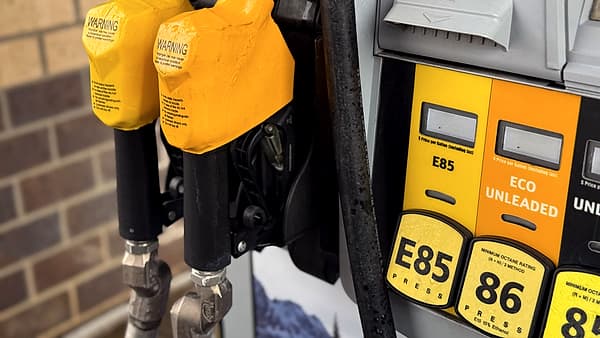
Federal rules require retailers to post the automotive fuel rating on at least one label on each face of every dispenser, placed conspicuously near the price per gallon, and require every transfer to a non-consumer to be certified with a rating. The octane rating is the average of the research and motor octane numbers. Measurement accuracy is regulated by state weights and measures programs against a national technical standard, with devices tested and sealed.

The Shelf Price Against the Price at the Checkout
There is no general federal rule requiring a store to charge the shelf price. Price accuracy is regulated by state weights and measures law, built on a national model that covers price verification and the method of sale, and enforced by state and county inspectors. Federal law reaches the subject through the prohibition on deceptive acts and practices, which bites where advertised prices are systematically not honored rather than where a single tag is stale.
A Gift Card When the Shop Closes
A gift card holder is an unsecured creditor of the issuing business. On a bankruptcy filing, an automatic stay generally prevents redemption unless the court permits it, and honoring cards during a case is a matter for court authorization rather than a right. Bankruptcy law gives individuals a limited, capped priority for deposits made toward the purchase of goods or services for personal, family or household use, which ranks ahead of general unsecured claims but well behind secured lenders.