The Shelf Price Against the Price at the Checkout
The tag on the shelf says one number and the register says another. What happens next is decided by state law, by a store policy that is usually voluntary, and by whether the difference looks like an error or like a pattern.

The rule in short
There is no general federal rule requiring a store to charge the shelf price. Price accuracy is regulated by state weights and measures law, built on a national model that covers price verification and the method of sale, and enforced by state and county inspectors. Federal law reaches the subject through the prohibition on deceptive acts and practices, which bites where advertised prices are systematically not honored rather than where a single tag is stale.
No general federal law requires a store to charge the price on the shelf. What governs is state law: price accuracy rules enforced by weights and measures officials, and consumer protection statutes that treat systematic overcharging as deception.
That is why the answer to the same question changes across a state line, and why the most useful thing in the moment is often not a statute at all but the store's own policy. Many chains give an overcharged item free or at a discount, and they do it because a voluntary rule is cheaper than an inspection finding.
Where price accuracy rules actually come from
Weights and measures is one of the oldest areas of state regulation, and it survives in every state as a program covering commercial devices and the way goods are sold. Most states build their rules on a national model set published as a set of uniform laws and regulations, which includes a uniform weights and measures law, a uniform regulation for the method of sale of commodities, a uniform packaging and labeling regulation, a uniform unit pricing regulation, and an examination procedure for price verification.
Adoption is state by state and not always complete, so the model tells you the shape of the rules rather than the content of any particular state's. What is consistent is the machinery: an inspector visits, samples items, compares the price charged against the price displayed, and records the result.
The uniform model also gives the vocabulary states use. Method of sale rules decide whether a thing is sold by weight, by measure or by count, which is a prior question to whether the price was right. Packaging and labeling rules decide what the package must declare. Price verification sits on top of both, checking that the number charged matches the number represented to the buyer, whichever way the item is sold.
What the federal layer does and does not cover
Federal law approaches pricing through deception rather than through accuracy. The general prohibition on unfair or deceptive acts and practices reaches conduct that misleads consumers, and the federal guides on deceptive pricing address former price claims, comparison claims and manufacturer suggested prices.
One narrow rule bites directly at retail. For food stores, advertising products at a stated price when those stores do not have them in stock and readily available during the advertised period is an unfair or deceptive practice, unless the advertisement clearly discloses that supplies are limited or that the item is only at some outlets. That is about availability rather than about a wrong tag, and it is covered separately under advertised offers that run out.
Regulators and courts treat these differently, and so should a shopper. A single overcharge is almost always a pricing file that was updated before the shelf label was replaced, and the remedy is a correction at the register. A store where the same items are consistently higher at the register than on the shelf is describing something else, and that is what a price verification inspection is designed to detect. Recording the date-free details of repeated discrepancies is what turns an irritation into a report worth making.
What an inspection measures
| Route | Who acts | Typical outcome |
|---|---|---|
| Raise it at the register | The shopper, before payment completes | Correction to the displayed price on the spot |
| Store price accuracy policy | The retailer, voluntarily | Item free or discounted, depending on the policy |
| Weights and measures inspection | State or county inspector | Findings, reinspection, and penalties for repeat failure |
| State consumer protection complaint | State attorney general or consumer office | Investigation where a pattern of overcharging appears |
| Federal deception route | The federal trade regulator | Action against advertising practices, not single tags |
Reading the tag before the argument starts
Shelf labels carry more information than most people read, and the detail is usually where the disagreement resolves. The item description on the tag has to match the item in the hand, including size and variant, because a tag placed under the wrong facing is the single commonest cause of a mismatch. Conditions printed on the tag matter: a member price, a multiple-purchase requirement, a limit per customer, or a promotional period that may have ended.
Unit price information on the tag is a separate thing again, governed by its own rules where a state has adopted them, and is covered under unit pricing and comparing sizes. A tag showing a different unit price from the item price is worth a photograph, because it usually means the underlying record is wrong rather than the label.
Promotions produce the other large category of disputes, and most of them are not overcharges at all. A price that applies only with a loyalty account, only when two are bought, or only up to a stated quantity is being applied correctly when the shopper does not meet the condition. Whether the condition was disclosed clearly enough is a fair question. Whether the register was wrong is usually not.
After paying, and when it is worth pursuing
Once payment completes, the practical position weakens. The transaction has closed, the shelf tag may be replaced within the hour, and the shopper's evidence is a receipt showing what was charged and nothing showing what was displayed. That is why the photograph in the aisle is worth more than any argument at the service desk.
Where a store refuses a correction it should have made, three routes remain. The store's own complaint process, which for a chain usually escalates past the branch. The state or county weights and measures office, which inspects price accuracy and takes reports from the public, described under who inspects scales and measures. And the state consumer protection office, which is the right destination where the problem looks systematic rather than accidental.
The amounts are usually small and the principle usually is not. A price verification program works on reported failures as well as routine sampling, and the store that overcharged by a dollar on one item is overcharging every customer who buys it. Reporting it costs nothing beyond the few minutes already spent noticing.
One habit makes all of this easier. Check the receipt before leaving the store, at least for the items bought on promotion, because those are where the errors concentrate. A discrepancy raised at the desk while the shopper is still in the building is fixed in a minute. The same discrepancy noticed at home becomes a journey, a queue and a conversation with someone who was not there and cannot see the shelf.
Points to carry away
- No general federal statute requires the lower of a shelf price and a scanned price to be charged.
- Price accuracy is inspected under state weights and measures law in most states.
- A national model set of uniform regulations underpins most state price verification programs.
- Many stores run a voluntary policy giving the item free or discounted after an overcharge.
- A repeated pattern of overcharging can amount to a deceptive act or practice.
Questions readers ask
Is a displayed price a binding offer?
In general contract terms, a price on a shelf is treated as an invitation to deal rather than a binding offer, so a store is not obliged to sell at a mistaken price on ordinary contract principles. That is why the protection comes from elsewhere: state price accuracy rules, state consumer protection statutes, and the store's own policy. A few states go further and require the advertised or displayed price to be honored, which is why the answer genuinely differs by state.
What is the practical way to get the lower price?
Photograph the shelf tag before leaving the aisle, including the item description and any dates or conditions printed on it. Raise the difference at the register rather than at the customer service desk afterwards, because the transaction has not closed yet. Ask specifically whether the store has a price accuracy policy, since many chains have one that is more generous than the law and staff do not always volunteer it. Keep the receipt either way.
Do self-checkout and online orders change anything?
Not legally, though they change what evidence exists. At a self-checkout the shopper sees each item price as it scans, which makes the discrepancy visible in the moment and easy to photograph. Online, the price shown at the point of order is normally the one charged, and a mismatch on the confirmation is a billing question with its own dispute route through the card issuer. In-store, the shelf tag remains the only record of what was displayed.
Sources
- NIST Handbook 130 — current editionPublishes the uniform laws and regulations, including price verification and method of sale.
- NIST Handbook 44 — current editionThe technical standard for weighing and measuring devices adopted by state programs.
- 15 U.S.C. 45 — Unfair or deceptive acts or practicesThe federal prohibition that reaches systematic misrepresentation of prices.
- 16 CFR Part 233 — Guides against deceptive pricingFederal guidance on former price, comparison and manufacturer price representations.
- 16 CFR 424.1 — Retail food store advertisingMakes advertising a stated price without stock readily available an unfair or deceptive practice.
- FTC — Advertising and marketing guidanceThe agency's own statement of what advertising and pricing claims must not do.
- NIST Office of Weights and Measures handbooksIndex of the handbooks states adopt as their commercial measurement standards.
National Attorney Hub is a publication, not a law firm. This article states general rules and cites its sources; it is not advice about any particular case, and the law differs by state and changes over time.
More in Prices & Gift Cards
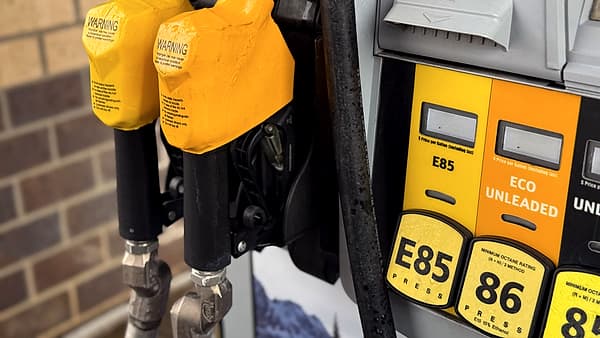
Fuel Pump Accuracy and the Octane Posted
Federal rules require retailers to post the automotive fuel rating on at least one label on each face of every dispenser, placed conspicuously near the price per gallon, and require every transfer to a non-consumer to be certified with a rating. The octane rating is the average of the research and motor octane numbers. Measurement accuracy is regulated by state weights and measures programs against a national technical standard, with devices tested and sealed.

Advertised Offers That Run Out
For retail food stores, offering products at a stated price by advertisement when the covered stores do not have them in stock and readily available during the advertised period is an unfair or deceptive act, unless the advertisement clearly discloses that supplies are limited or that the item is only at some outlets. Four defenses exist: adequate ordering, a rain check, a comparable substitute at the advertised price, or other compensation of at least equal value.
A Gift Card When the Shop Closes
A gift card holder is an unsecured creditor of the issuing business. On a bankruptcy filing, an automatic stay generally prevents redemption unless the court permits it, and honoring cards during a case is a matter for court authorization rather than a right. Bankruptcy law gives individuals a limited, capped priority for deposits made toward the purchase of goods or services for personal, family or household use, which ranks ahead of general unsecured claims but well behind secured lenders.