Unit Pricing and Comparing Sizes
The small number in the corner of the shelf label is the only figure on the tag that lets two different sizes be compared. Whether it has to be there at all depends on the state, the size of the store and the kind of product.

The rule in short
Unit pricing expresses the price of a package in a common measure such as price per ounce or per hundred count, so that sizes can be compared. It is not required nationally. A national model uniform unit pricing regulation exists and states adopt it in whole or in part, typically applying it to larger stores and exempting small retailers and certain product categories. Federal packaging and labeling law governs the net quantity declaration the unit price is calculated from.
Unit pricing is the small figure on a shelf label that restates the price in a common measure, such as price per ounce or per hundred sheets. Its only purpose is to let two packages of different sizes be compared without arithmetic.
There is no national requirement to display it. Some states mandate it, usually for stores above a certain size, and others leave it entirely to the retailer. A national model regulation exists and supplies the text that adopting states copy, which is why unit pricing looks similar in the places that require it and absent in the places that do not.
What the figure is and how it is produced
A unit price is the total price of the package divided by its net quantity, expressed in a prescribed unit. The net quantity comes from the package's own declaration, which federal packaging and labeling law governs: consumer commodities must carry an accurate statement of the net quantity of contents, in the prescribed form and location.
Two inputs therefore produce the figure, and either can be wrong. If the item price in the store's file is stale, the unit price printed alongside it is stale too. If the pack size recorded for the item is wrong, the unit price is wrong even when the item price is right. That is why a unit price that does not divide cleanly into the item price is a useful signal that something in the record needs attention.
Where posting it is actually required
Requirements come from state law. Where a state has adopted the uniform model, the pattern is recognizable: the requirement applies to stores above a stated size or sales volume, it lists the commodity categories covered, it prescribes the unit for each category so that competing products are comparable, and it sets rules on the legibility and placement of the figure on the label.
Exemptions follow the same pattern. Small independent retailers are commonly excluded on the ground that the administrative burden is disproportionate. Products sold in a single standard size, items sold by count where a per-item price is already obvious, and certain fresh or variable-weight goods are frequently outside the requirement as well.
Where no requirement exists, many retailers post unit prices anyway. Large chains operate across state lines and it is simpler to print one label format everywhere than to maintain two. That is convenient for shoppers and it has a consequence worth noting: a voluntary figure carries no enforcement behind it, so a store that stops posting it, or posts it inconsistently, is not necessarily breaking any rule.
The comparison collapses the moment two products on the same shelf are expressed differently: one per ounce and one per hundred grams, one per sheet and one per roll, one per serving and one per package. Prescribing the unit by category is the whole point of the model regulation, and it is the part most often applied loosely. Where two labels use different units, the honest answer is that the shelf is not doing the comparison and the shopper has to.
Which unit goes with which kind of product
| Product type | Unit usually prescribed | Where comparison goes wrong |
|---|---|---|
| Dry packaged foods | Price per ounce or per pound | Drained weight against total weight for canned goods |
| Liquids | Price per fluid ounce or per quart | Concentrates compared against ready-to-use products |
| Paper goods | Price per sheet, per hundred sheets or per roll | Sheet size and roll length differing between brands |
| Items sold by count | Price per item or per hundred | Bundles where the count includes different sizes |
| Variable-weight goods | Price per pound at the scale | Packaging weight included or excluded in the tare |
When the package changes rather than the price
Unit pricing is the only thing on a shelf label that reveals a package quietly getting smaller. A product whose price holds steady while its contents shrink shows an unchanged item price and a rising unit price, and the second figure is the one telling the truth.
That is lawful in itself. A manufacturer may sell whatever quantity it chooses, provided the net quantity is declared accurately in the prescribed form. What is not lawful is misrepresenting the quantity or using packaging that misleads about how much is inside, which is where the general prohibition on deceptive practices and the packaging rules meet. For a shopper, the practical value is simply that the unit price is the number to watch over time.
The same figure exposes the reverse trick, which is a larger package that is not better value. Bulk sizes are widely assumed to be cheaper per unit, and often they are not, particularly where a smaller size is on promotion. Checking the unit price on both takes a second and reverses the assumption often enough to be worth the habit.
Using the figure, and what to do when it is missing
Three habits get most of the value. Compare the unit price rather than the shelf price when choosing between sizes, since the larger pack is not reliably cheaper per unit and promotional pricing frequently reverses the usual assumption. Check that the two labels being compared use the same unit before trusting the comparison. And treat a unit price that does not correspond to the item price as a warning about the store's records rather than as an opportunity.
A fourth habit is worth adding for anyone buying regularly. Photographing a shelf label occasionally builds a personal record of what a product cost per unit, which is the only reliable way to tell whether a promotion is a genuine reduction or a return to a price that was in force a month earlier. Federal guidance on former price claims exists for the same reason, because a reduction measured against a price nobody actually paid is not a reduction.
Where a state requires unit pricing and a store is not displaying it, or is displaying it illegibly, that is a matter for the state or county weights and measures office, which enforces the same body of rules described under who inspects scales and measures. That office also runs the price verification work described under scanner accuracy and how it is inspected.
Where a unit price and an item price simply disagree, the immediate remedy is the ordinary one at the register, covered under the shelf price against the price at the checkout. Neither figure creates a right by itself; what they do is show, before anything is bought, whether the store's pricing system is being kept in order. A shelf where the small figures are consistently absent, illegible or arithmetically impossible is telling a shopper something useful about the rest of the store, whatever the state requires.
Points to carry away
- Unit pricing is a state requirement where adopted, not a national one.
- A national model uniform unit pricing regulation supplies the standard states copy.
- Requirements commonly apply to larger stores and exempt small retailers.
- The unit used must be consistent across a product category to be comparable.
- Federal law governs the net quantity declaration on the package itself.
Questions readers ask
Why do two brands of the same product sometimes show different units?
Because the unit follows the way the product is sold, and manufacturers do not always sell the same thing the same way. One brand may declare net weight and another a fluid measure, one may sell by count and another by weight, and a concentrated version may be honestly cheaper per ounce while producing fewer servings. Where a state has adopted the uniform regulation, it prescribes which unit applies to which category precisely to stop this. Where it has not, comparison takes arithmetic.
Is the unit price binding if it contradicts the item price?
The price charged is the item price, and the unit price is a derived figure for comparison. A mismatch between the two usually means the label was printed from an old item price or the wrong pack size, which makes it a sign that the pricing record for that item is unreliable. It is worth raising for that reason rather than because the unit figure itself creates a right to pay less.
Does unit pricing apply online?
State rules were written for physical shelves and their application to online listings is uneven. Some jurisdictions have extended their requirements to online display; many have not, and online grocery listings often show a unit price voluntarily because shoppers expect it. Where it appears, treat it the same way as a shelf label: useful, derived, and only as accurate as the pack size recorded behind it.
Sources
- NIST Handbook 130 — current editionPublishes the uniform unit pricing regulation and the uniform packaging and labeling regulation.
- NIST Office of Weights and MeasuresThe federal office that develops the model regulations state programs adopt.
- 15 U.S.C. 1451 — Fair Packaging and Labeling Act policyThe federal declaration of policy behind accurate net quantity information on packages.
- 16 CFR Part 500 — Fair packaging and labeling regulationsFederal rules on net quantity of contents statements for consumer commodities.
- 16 CFR Part 502 — Regulations under the Fair Packaging and Labeling ActFurther requirements on labeling of consumer commodities covered by the Act.
- 15 U.S.C. 45 — Unfair or deceptive acts or practicesThe federal prohibition reaching misleading size and price representations.
- NIST Office of Weights and Measures handbooksIndex of the handbooks, including net contents checking procedures.
National Attorney Hub is a publication, not a law firm. This article states general rules and cites its sources; it is not advice about any particular case, and the law differs by state and changes over time.
More in Prices & Gift Cards
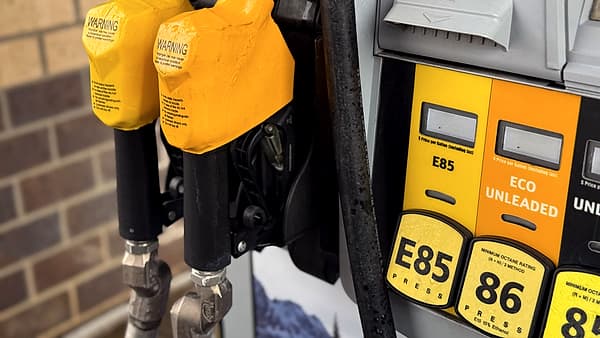
Fuel Pump Accuracy and the Octane Posted
Federal rules require retailers to post the automotive fuel rating on at least one label on each face of every dispenser, placed conspicuously near the price per gallon, and require every transfer to a non-consumer to be certified with a rating. The octane rating is the average of the research and motor octane numbers. Measurement accuracy is regulated by state weights and measures programs against a national technical standard, with devices tested and sealed.

Advertised Offers That Run Out
For retail food stores, offering products at a stated price by advertisement when the covered stores do not have them in stock and readily available during the advertised period is an unfair or deceptive act, unless the advertisement clearly discloses that supplies are limited or that the item is only at some outlets. Four defenses exist: adequate ordering, a rain check, a comparable substitute at the advertised price, or other compensation of at least equal value.

The Shelf Price Against the Price at the Checkout
There is no general federal rule requiring a store to charge the shelf price. Price accuracy is regulated by state weights and measures law, built on a national model that covers price verification and the method of sale, and enforced by state and county inspectors. Federal law reaches the subject through the prohibition on deceptive acts and practices, which bites where advertised prices are systematically not honored rather than where a single tag is stale.