Scanner Accuracy and How It Is Inspected
Somebody does check. State and county inspectors walk into stores with a basket, scan a sample of items, compare each result against the price on display, and write down every difference in both directions. What happens next depends on how many differences there were and which way they ran.
The rule in short
Scanner accuracy is inspected under state weights and measures programs using a sampling method drawn from a national model examination procedure. An inspector selects a sample of items, records the displayed price, scans them, and compares. Overcharges are weighted more heavily than undercharges, a failed inspection usually triggers correction and reinspection, and repeat failure escalates to penalties. Findings are records that a shopper can often request.
Scanner accuracy is inspected, and the method is unglamorous. An inspector walks into a store, selects a sample of items, writes down the price on display for each, scans them, and compares the two lists.
The program is run by the state or county, not by the federal government, and it is built on a national model examination procedure that most states have adopted in some form. That is why the mechanics are broadly similar everywhere while the thresholds and penalties are not.
How the sample is chosen
Nobody checks an entire store. The examination works by sampling, and the way the sample is drawn is the part that makes the result meaningful. Inspectors typically take items from across departments rather than one aisle, weight the sample toward advertised and promotional items because those are where pricing errors cluster, and include a proportion of items on regular price so the sample is not entirely promotional.
The displayed price is recorded first, from the shelf label or the sign, before the item is scanned. That order matters. Recording the scanned price first and then looking for a label invites an inspector to find the label that matches, which is exactly the bias the procedure is designed to remove.
Sample size varies with the size of the store and the resources of the program. A small convenience store may be checked on a couple of dozen items and a large supermarket on considerably more. What matters for the validity of the result is not the raw number but whether the sample was drawn across the store and included the categories where errors are likely. A sample of fifty items all taken from one aisle proves very little about a building with forty aisles in it.
How the errors are counted
Each item produces one of three results: the scanned price matches the displayed price, it is higher, or it is lower. All three are recorded. The accuracy figure comes from the proportion that matched, and the enforcement consequence comes from the overcharges.
The asymmetry is deliberate. An undercharge costs the store money and tends to be corrected quickly without anyone insisting. An overcharge costs the public money and will keep costing it until someone notices, which is why programs are built around finding them. Some jurisdictions also weight an error by its size, so a large overcharge on an expensive item counts for more than a few cents on a can.
Sampling produces a rate, not a verdict on one item. A store can be found compliant while a shopper is standing at the register having been overcharged, and both facts can be true. That is why the individual remedy and the regulatory remedy run separately: the shopper asks for the price to be corrected under the store's policy, and the inspection decides whether the system as a whole is working.
What follows a failed inspection
| Stage | What typically happens | What the store must do |
|---|---|---|
| First failure | Written notice of the findings | Correct the pricing records and shelf labels |
| Reinspection | A return visit within a set period | Demonstrate the errors have been fixed |
| Repeat failure | Civil penalties, often per violation | Pay, and usually submit to closer monitoring |
| Persistent failure | Escalated action, including orders to stop | Cease selling affected items until corrected |
| Pattern across locations | State consumer protection interest | Answer at company level rather than store level |
Why the errors happen at all
Almost none of it is deliberate. A modern store holds tens of thousands of items whose prices change weekly, and the price a register charges comes from a central file rather than from the shelf. Every promotion is two operations: a change to the file and a change to the label. When those two happen at different times, the store is briefly wrong in one direction or the other.
The predictable failure points are the start and end of a promotion, items with more than one label, items whose facings have been moved, and multi-buy offers where the rule in the file does not match the wording on the sign. Deliberate overcharging exists but it is rare, and it looks different: consistent, on high-margin items, and surviving correction.
Weighed items add their own failure mode, because two systems have to agree rather than one. The scale must be accurate and sealed, the price per pound in the file must match the sign, and the tare weight of the packaging must be set correctly. An error in any of the three produces a wrong total on a label that looks perfectly authoritative, and a shopper has no way of checking it from the shelf.
Who actually runs the inspection program
Responsibility sits at state or county level and the arrangement differs sharply. Some states run a single centralized program from a department of agriculture or a department of consumer affairs. Others delegate to counties or cities, so two neighboring towns can be inspected by different offices on different cycles with different penalty schedules. A few jurisdictions license private service agencies to test devices, with the state auditing the testers rather than the stores directly.
The practical consequence for a shopper is that finding the right office takes a moment. Searching for weights and measures together with the county name is usually faster than starting at the state level, because the county office is often the one that actually visits.
What a shopper can actually do with this
Three things, in order of effort. First, check the receipt against the promotional items before leaving, since that is where errors concentrate and the transaction is easiest to correct on the spot. The individual remedy is described under the shelf price against the price at the checkout.
Second, report a pattern rather than an incident. A report naming the store, the specific items, the displayed price and the price charged is something an inspector can act on. A report saying the store overcharges is not. The office that receives it is the same one described under who inspects scales and measures, and it inspects devices and prices under one program.
Third, ask for the record. Inspection results are usually public, and a store with a run of failures is a store where checking the receipt is worth the thirty seconds. The same reasoning applies to the labels themselves, since a shelf that carries no unit price where one is required is a sign the pricing system is not being maintained, which is covered under unit pricing and comparing sizes.
The wider point is that price accuracy is a systems problem, not a moral one. Stores are not usually trying to overcharge, and shoppers are not usually imagining it. What exists is a file of hundreds of thousands of records being updated against a building full of paper labels, checked by an inspector a handful of times a year. Errors are the normal output of that arrangement, which is precisely why somebody samples for them and why a shopper checking a receipt is doing the same job, on a much smaller scale, at the only moment when it can still be fixed for free.
Points to carry away
- Inspections use a sample of items rather than checking an entire store.
- Both overcharges and undercharges are recorded, but overcharges drive the outcome.
- A failed inspection normally leads to correction, reinspection and escalating penalties.
- The examination procedures come from a national model that states adopt individually.
- Complaints from the public can prompt an inspection outside the routine schedule.
Questions readers ask
Are undercharges counted against a store?
They are recorded, and in most programs they are treated as errors in the accuracy calculation even though they favor the shopper. The reasoning is that a system producing errors in one direction is producing them in both, and that a store benefiting from an undercharge on one line is usually overcharging on another. What differs is the consequence: enforcement action is driven by overcharges, because those are the ones that cost the public money.
Can a shopper see the inspection results for a store?
Often, though it depends on the state. Inspection records held by a state or county agency are usually public records subject to that state's disclosure law, and some jurisdictions publish results directly. Where they are not published, a written request to the weights and measures office naming the store and its address is the route. That is worth knowing because a store's history tells a shopper far more than a single bad experience at a register.
What triggers an inspection outside the routine schedule?
Complaints. Routine inspection cycles are set by resources, so a store may be visited once a year or less. A specific complaint from a member of the public, particularly one that names items and describes a repeated pattern, can prompt a visit sooner. Inspectors also follow up after a failure, and reinspection is usually part of the corrective process rather than something the store can decline.
Sources
- NIST Handbook 130 — current editionPublishes the price verification examination procedure and the uniform regulations behind it.
- NIST Handbook 44 — current editionSets specifications and tolerances for the weighing and measuring devices used in retail.
- NIST Office of Weights and MeasuresThe federal office that develops the model standards state programs adopt.
- NIST Office of Weights and Measures handbooksIndex of the handbook series, including net contents checking and examination procedures.
- 15 U.S.C. 45 — Unfair or deceptive acts or practicesThe federal backstop where inaccurate pricing amounts to a deceptive practice.
- 16 CFR Part 233 — Guides against deceptive pricingFederal guidance on how prices may be represented and compared.
- FTC — Advertising and marketing guidanceAgency guidance on pricing and advertising claims that stores are held to.
National Attorney Hub is a publication, not a law firm. This article states general rules and cites its sources; it is not advice about any particular case, and the law differs by state and changes over time.
More in Prices & Gift Cards
Fuel Pump Accuracy and the Octane Posted
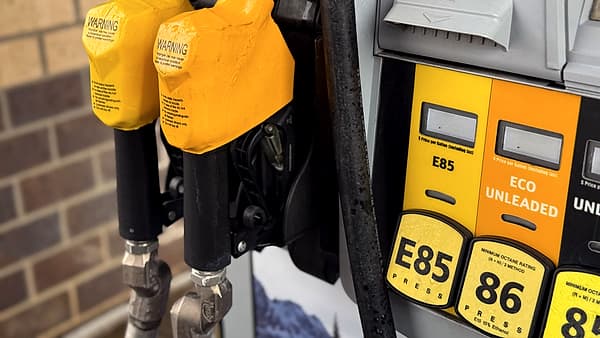
Federal rules require retailers to post the automotive fuel rating on at least one label on each face of every dispenser, placed conspicuously near the price per gallon, and require every transfer to a non-consumer to be certified with a rating. The octane rating is the average of the research and motor octane numbers. Measurement accuracy is regulated by state weights and measures programs against a national technical standard, with devices tested and sealed.

Advertised Offers That Run Out
For retail food stores, offering products at a stated price by advertisement when the covered stores do not have them in stock and readily available during the advertised period is an unfair or deceptive act, unless the advertisement clearly discloses that supplies are limited or that the item is only at some outlets. Four defenses exist: adequate ordering, a rain check, a comparable substitute at the advertised price, or other compensation of at least equal value.

The Shelf Price Against the Price at the Checkout
There is no general federal rule requiring a store to charge the shelf price. Price accuracy is regulated by state weights and measures law, built on a national model that covers price verification and the method of sale, and enforced by state and county inspectors. Federal law reaches the subject through the prohibition on deceptive acts and practices, which bites where advertised prices are systematically not honored rather than where a single tag is stale.