Store Credit and Posted Refund Policies
There is no national right to return something because it was the wrong color. What exists instead is the store's own posted policy, a handful of state rules about disclosing it, and separate federal rights that apply to particular ways of buying.

The rule in short
Federal law does not create a general right to a refund for a change of mind. A retailer's posted policy governs the transaction, and several states require the policy to be conspicuously disclosed before purchase, treating an undisclosed or unposted policy as unenforceable and sometimes requiring a cash refund instead. Separate federal rules give real rights for mail, internet and telephone orders and for certain door-to-door sales.
No general federal law requires a store to take something back because the buyer changed their mind. What governs is the store's own posted policy, and in several states a rule about whether that policy was properly disclosed.
This surprises people because refunds feel like a right. They are a commercial practice that most retailers offer because competition makes it sensible, and the law's involvement is mostly about honesty: a seller must not misrepresent its terms, and in a number of states must display them where a buyer can read them before paying.
The posted policy, and what makes it binding
A refund policy is a term of the sale. Where it is displayed conspicuously before purchase, on a sign at the register, on the receipt in advance of the transaction, or on the page during an online checkout, it forms part of the deal and it governs. That is why the same store can offer thirty days with a receipt, fourteen days for sale items, and nothing at all on final-sale goods, all lawfully.
Several states then add a disclosure requirement. The common form obliges retailers to post their policy conspicuously and provides that a retailer failing to do so must accept returns within a stated period, sometimes for a cash refund. Some states set out where the sign has to be, some allow the receipt to carry the terms, and some exempt particular categories such as perishable goods, custom orders or opened media. Because the mechanics differ, the practical question in a dispute is not what the policy says but whether it was displayed at all.
What store credit actually is
Store credit is a promise by the retailer to supply goods later, which places it in the same category as a gift card rather than in the same category as money. It is usable only at that business, it may carry an expiry depending on the state and how it was issued, and it is exposed to the business failing.
That exposure is the part worth weighing. Cash returned is finished. Credit taken is a continuing relationship with a company whose circumstances may change, and holders of credit balances rank as unsecured creditors if it does, a position described under a gift card when the shop closes. Where a policy permits either, cash is worth taking even at the cost of a slightly smaller sum.
Credit issued without a receipt is a separate case that shows up constantly. Many retailers will take back an item without proof of purchase at the lowest price the item has recently sold for, and will issue credit rather than cash, in order to limit the value of returned stolen goods. That is a commercial policy rather than a legal rule, and it is one of the reasons keeping a receipt is worth more than it appears at the moment of buying.
The commonest self-inflicted mistake at a service desk is describing a fault as dissatisfaction. A refund policy is written for buyers who changed their mind; state sales law governs goods that do not work. Saying that an item is faulty, describing the fault, and asking for a remedy on that basis opens a different door, one that a sign reading no refunds does not close. Where the goods failed, say so plainly and in writing.
Where federal rules do give a right
| How the purchase was made | What federal law provides | Practical effect |
|---|---|---|
| In store, change of mind | Nothing generally | The posted policy governs, subject to state disclosure rules |
| Mail, internet or telephone order | Shipment in the promised time, or a cancellation option | A refund where the seller cannot ship as promised |
| Qualifying sale away from business premises | A cancellation period with prescribed notice | A right to cancel within the stated window |
| Paid by credit card | Billing error procedure and transaction defenses | A route where the seller refuses its own terms |
| Misrepresented return terms | The prohibition on deceptive practices | Enforcement action rather than an individual refund |
The rule that catches delayed orders
The most useful federal provision for ordinary shoppers concerns goods ordered by mail, internet or telephone. A seller must have a reasonable basis for expecting to ship within the time stated, or within thirty days where no time was stated. If it cannot, it must offer the buyer the choice of consenting to a delay or canceling for a full refund, and it must make that offer promptly.
This is a genuine right rather than a policy, and it does not depend on what the seller's terms say. It also gives a straightforward script: a written message asking the seller to confirm the shipping date or cancel the order and refund it invokes exactly the structure the rule contemplates.
The door-to-door cancellation rule is the other genuine federal right, and it is narrower than people remember. It applies to qualifying sales made away from a seller's ordinary place of business, above a low threshold, and it requires the seller to give a written notice of the cancellation right in a prescribed form. It does not apply to something bought in a shop, and it is not the source of any general cooling-off period at retail.
Approaching a return so that it works
Read the policy before buying anything likely to come back, particularly for sale items, opened electronics and anything custom. Keep receipts and the packaging, since almost every policy conditions the remedy on both. Ask at the register whether an item is final sale rather than assuming, because the answer is frequently different from the general policy.
Where a return is refused, establish first which of the two questions is live: was the policy followed, or were the goods defective. If the policy was not posted, say so and ask which state rule the retailer relies on. If the goods failed, put the fault in writing. If the seller simply will not honor its own stated terms, the card routes described above are the practical remedy, and the state consumer protection office is the destination for a pattern.
Two related areas follow the same reasoning. Money paid in advance for goods not yet collected is dealt with under layaway deposits and an abandoned purchase. And where the dispute is about the amount charged rather than about a return, the price accuracy rules apply instead, as set out under the shelf price against the price at the checkout. Sorting out which of the three questions is really being asked usually resolves the conversation faster than any argument about the sign.
Points to carry away
- No general federal statute requires a refund where goods are simply unwanted.
- A posted refund policy usually governs the transaction if disclosed before purchase.
- Several states make an unposted or hidden policy unenforceable against the buyer.
- Federal rules do give rights for mail, internet and telephone orders that are delayed.
- Store credit is an unsecured promise, unlike cash already returned.
Questions readers ask
Do faulty goods change the analysis?
Substantially. A refund policy governs a change of mind; a defective product raises the seller's obligations under state sales law, including implied warranties that goods are merchantable and fit for their ordinary purpose. Those obligations do not disappear because a sign says exchange only, though they can be limited in ways state law permits and are affected by any express disclaimer. A shopper returning something broken should say plainly that the item is defective rather than that it is unwanted, because the two go down different routes.
Is store credit ever the required outcome?
It can be where the posted policy says so and the policy was properly disclosed, since the policy is part of the deal on those facts. Some state rules go the other way, requiring a cash refund within a stated period where a retailer failed to post its policy at all. What store credit never does is put the buyer in the same position as cash: it is a promise from the same business, exposed to that business failing, and usable only there.
Does paying by card add anything?
It adds procedure rather than a return right. The billing error process lets a cardholder dispute charges for goods not accepted or not delivered as agreed, within a written notice period, and a separate provision lets a cardholder assert claims and defenses arising from the underlying transaction against the issuer, subject to conditions. Neither turns a no-refund policy into a refund. Both are useful where a seller has refused to honor its own terms.
Sources
- 15 U.S.C. 45 — Unfair or deceptive acts or practicesReaches a seller that misrepresents its return terms or fails to honor a stated policy.
- 16 CFR Part 435 — Mail, internet or telephone order merchandiseRequires shipment within the promised time or a properly offered option to cancel and be refunded.
- 16 CFR Part 429 — Cooling-off period for door-to-door salesGives a cancellation right for qualifying sales made away from a seller's place of business.
- 16 CFR Part 233 — Guides against deceptive pricingGuidance on price and bargain representations that frame what was actually promised.
- 15 U.S.C. 1666 — Correction of billing errorsThe statutory billing error procedure for credit card charges.
- 12 CFR 1026.13 — Billing error resolutionThe regulation setting notice periods and the issuer's investigation duties.
- 15 U.S.C. 1666i — Claims and defenses against a card issuerLets a cardholder raise transaction disputes against the issuer in defined circumstances.
National Attorney Hub is a publication, not a law firm. This article states general rules and cites its sources; it is not advice about any particular case, and the law differs by state and changes over time.
More in Prices & Gift Cards
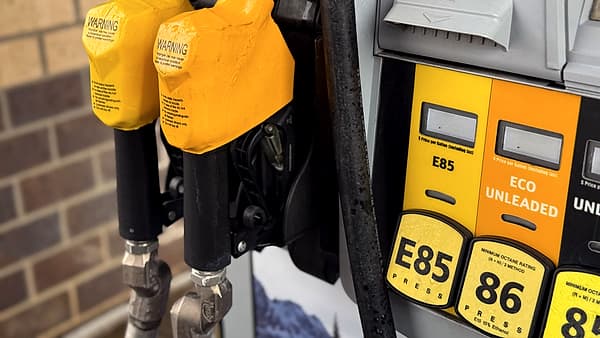
Fuel Pump Accuracy and the Octane Posted
Federal rules require retailers to post the automotive fuel rating on at least one label on each face of every dispenser, placed conspicuously near the price per gallon, and require every transfer to a non-consumer to be certified with a rating. The octane rating is the average of the research and motor octane numbers. Measurement accuracy is regulated by state weights and measures programs against a national technical standard, with devices tested and sealed.

Advertised Offers That Run Out
For retail food stores, offering products at a stated price by advertisement when the covered stores do not have them in stock and readily available during the advertised period is an unfair or deceptive act, unless the advertisement clearly discloses that supplies are limited or that the item is only at some outlets. Four defenses exist: adequate ordering, a rain check, a comparable substitute at the advertised price, or other compensation of at least equal value.

The Shelf Price Against the Price at the Checkout
There is no general federal rule requiring a store to charge the shelf price. Price accuracy is regulated by state weights and measures law, built on a national model that covers price verification and the method of sale, and enforced by state and county inspectors. Federal law reaches the subject through the prohibition on deceptive acts and practices, which bites where advertised prices are systematically not honored rather than where a single tag is stale.