Registering the Shop as Well as the Person
A shop with fully licensed staff can still be operating unlawfully, because the room itself is licensed separately. The establishment license names a holder, ties to one address, and in most states cannot simply be handed to a buyer.

The rule in short
Nearly every state licenses the premises where personal care services are performed as well as the practitioners performing them. The establishment license is held by the owner or operator, is issued for a single address, and usually must be surrendered or reapplied for when the business is sold. Most statutes also require a licensed person to be in charge whenever the shop is open, and make the establishment holder answerable for unlicensed practice on the premises.
A salon needs a license of its own, held by the owner or operator and tied to one address. Every practitioner inside can be fully licensed and the business can still be unlawful, because the two licenses answer different questions.
The individual license asks whether a person is competent to perform a service. The establishment license asks whether a place is fit for that service to be performed in it, and who answers if it is not. Boards enforce the second at least as hard as the first, because the premises is where sanitation, plumbing, ventilation and record keeping either happen or do not.
What counts as an establishment
The definitions are deliberately wide. California defines an establishment as any premises, building or part of a building where any activity licensed under the chapter is practiced. That reaches a single room inside a larger building, a suite rented from a suite operator and a converted room in a house. The test is whether licensed work happens there, not whether the space looks like a shop.
The same statute makes it unlawful to conduct or operate an establishment where barbering, cosmetology or electrolysis is practiced without a license. Florida takes the same line and adds an explicit prohibition on permitting an unlicensed employee to practice, with an administrative fine available for each count. Those two offenses stack, so a single inspection can produce a finding against the shop for operating unlicensed and a second finding for each unlicensed person found working.
Some services sit outside the cosmetology act entirely and carry their own premises permits instead. Tattoo studios, piercing salons and massage establishments are the usual examples, and each has a separate application route described in tattoo and body art permits and massage establishment permits. A business offering several categories under one roof collects several premises licenses.
The person in charge
Most states insist that someone licensed be in charge of the establishment while it is open. California's provision is short and absolute: an establishment shall at all times be in the charge of a person licensed under the chapter, except an apprentice. An apprentice may not fill the role because an apprentice is themselves required to be supervised, a point drawn out in training hours and the apprentice route.
This is what allows an unlicensed owner to run a salon. The company or individual may hold the establishment license and take the profit, but a licensee has to be physically responsible for the licensed work. Where a state requires that person to be named, changing them is a filing, not an internal decision. Where it does not, the duty still bites at inspection, because an inspector who arrives to find only unlicensed staff on the floor writes it up.
Buyers routinely assume the salon license comes with the goodwill and the chairs. In most states it does not. Florida's statute says plainly that no salon license may be transferred from the name of the original licensee to another, and many boards treat a change of ownership as the closure of one establishment and the opening of a new one. A purchase agreement that does not make the new license a condition of closing can leave the buyer holding a shop it cannot lawfully open.
The premises conditions themselves
Establishment rules describe the physical space. Washington's provision is representative and unusually specific: an outside entrance separate from any rooms used for sleeping or residential purposes, adequate toilet facilities within or adjacent to the shop, compliance with local zoning, and compliance with all applicable local and state fire codes. It also requires liability insurance coverage of at least one hundred thousand dollars for combined bodily injury and property damage.
Posting rules run alongside. The establishment license goes in the reception area where the public can see it, and each individual license goes at that person's workstation. Inspectors check this first because it takes seconds and immediately shows who is meant to be working. Beyond that sit the sanitation requirements, which are the largest single category of violation and are covered in sanitation, disinfection and equipment rules.
| License | Who holds it | What it is tied to |
|---|---|---|
| Individual practitioner license | The person performing services | The person, valid anywhere in the state |
| Establishment license | The owner or operating company | One address, usually non-transferable to a new owner |
| Mobile unit license | The unit operator | The vehicle, with a fixed base address on file |
| Local business tax receipt or permit | The business entity | The municipality, often conditional on the state license |
| Separate health department permit | The studio or establishment operator | Body art and massage premises, issued under other statutes |
Moving, selling or closing
A move is not a change of address on a form. Florida allows a salon license to be transferred from one location to another only upon department approval, which shall not be unreasonably withheld. In practice that means an application, a fee and usually an inspection of the new space before services may be performed there. Opening at the new address before approval is operating an unlicensed salon.
A sale is handled the same way in reverse. The seller surrenders or lets the license lapse, and the buyer applies fresh, which restarts the inspection and often the local permit as well. Florida's health studio scheme takes the same approach in a different industry, treating a change of ownership as a trigger for re-registration, and the same instinct runs through personal care licensing. Buyers should build the timing into the purchase rather than around it.
Closing is the simplest of the three. Most boards want written notice and the return or surrender of the license, and several tie the establishment license to the record-keeping duty, so client records and employee records may have to be retained for a period after the doors shut. Where booth renters worked in the shop, the closure raises a further question about whose records those were, which is taken up in booth rental and who holds the license.
The local layer on top
State licensing is rarely the whole story. Cities and counties add business tax receipts, occupancy permits, sign permits and, in some places, a separate health permit. Florida ties the two layers together by allowing a local business tax receipt to be issued only after an active state registration exists in the parallel health studio scheme, and many municipalities apply the same sequencing to salons. The state license therefore usually has to come first.
Zoning is the trap that catches new owners hardest. A unit zoned for retail is not automatically zoned for personal services, and a state board will not check that for the applicant. Washington puts the obligation on the shop directly, requiring the premises to meet the zoning requirements of the county, city or town and all applicable fire codes. An establishment license issued in error does not cure a zoning problem; the city can still order the business to stop.
Plumbing and water supply sit in the same category. Rules on hot and cold running water at each station, on sinks that may not be shared with a toilet room, and on waste water disposal come from building and health codes rather than from the board. They matter most when converting a space that was previously something else, because the fit-out cost of meeting them is often larger than the license fees the applicant was budgeting for.
Points to carry away
- The premises where licensed services are performed needs its own license in addition to the individual licenses.
- An establishment license is issued for one address and generally may not be transferred to a new owner's name.
- A move to a new location normally requires board approval rather than a simple change of address.
- Most states require someone licensed to be in charge of the establishment at all times it is open.
- The establishment holder answers for unlicensed practice on the premises even if the work was done by someone else.
Questions readers ask
Does a suite or studio inside a larger building need its own establishment license?
Usually yes. Boards treat a lockable, separately operated suite as its own establishment, because it has its own tools, its own sanitation practice and its own person in charge. The building operator who leases the suites may also need a license covering common areas. States differ on whether a shared reception area is enough to make the whole floor one establishment, and several have written suite rules specifically. Asking the board before signing the lease is far cheaper than discovering the answer at an inspection.
Who may hold the establishment license if the owner is not a licensed practitioner?
Most states allow an unlicensed person or a company to own a salon and hold the establishment license. What they do not allow is an unlicensed person to supervise the licensed work. That gap is closed by requiring a licensed individual to be in charge of the premises whenever services are performed, sometimes named on the license as a manager. An investor-owned shop therefore needs both the establishment license in the company's name and a designated licensee physically present during opening hours.
What happens to the license if the shop closes temporarily?
An establishment license normally continues to run until its expiry date and can be renewed even while the premises is closed, provided the address has not changed. Longer closures raise two problems. Renewal often requires the board to be able to inspect, and a shop that cannot be inspected may be refused. A change of use or a building alteration during the closure can also require a fresh inspection before reopening. Notifying the board of an extended closure usually prevents both problems.
Sources
- California Business and Professions Code section 7346Defines an establishment as any premises or part of a building where a licensed activity is practiced.
- California Business and Professions Code section 7348Requires an establishment to be in the charge of a licensed person at all times, and excludes apprentices from that role.
- California Business and Professions Code section 7317Makes it unlawful to conduct or operate an establishment where licensed work is practiced without a license.
- Florida Statutes section 477.025, salon licensureBars transferring a salon license to another name and allows a location transfer only with department approval.
- Florida Statutes section 477.029, prohibited actsMakes operating an unlicensed salon and permitting unlicensed practice separate offenses with fines per count.
- Revised Code of Washington 18.16.175Sets premises conditions including a separate entrance, toilet facilities, zoning and fire code compliance, and license posting.
National Attorney Hub is a publication, not a law firm. This article states general rules and cites its sources; it is not advice about any particular case, and the law differs by state and changes over time.
More in Salons & Personal Care

The Examination and Moving a License Between States
Personal care licensing examinations are set in two parts, a written theory paper covering law and sanitation and a practical paper performed on a mannequin or model. A license does not travel by itself. A practitioner moving states applies for licensure by endorsement, and the receiving board decides whether the original training hours, examination and current standing meet its own standard. Where they fall short, the usual remedy is added hours or a re-examination.
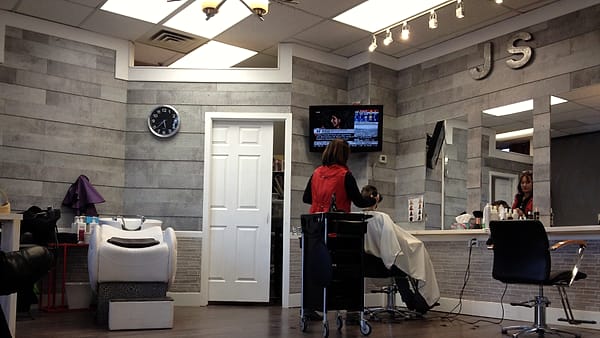
Which Personal Care Services Need a License
Nearly every state licenses the services that cut, color, chemically treat or abrade hair, skin and nails when they are performed for compensation. Statutes then carve out named exemptions, most commonly shampooing, natural hair braiding, hair wrapping, threading and basic makeup application. Tattooing, piercing and massage sit under separate schemes with their own permits. Working outside the scope printed on a license is itself a violation.
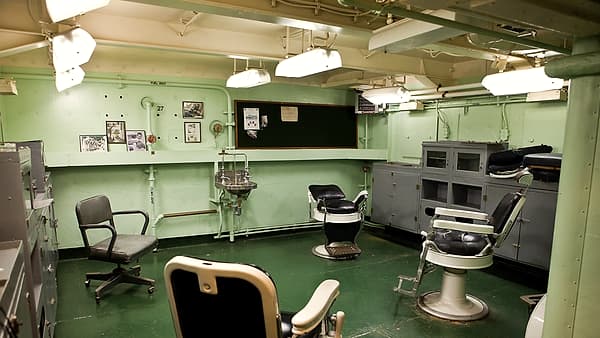
Working From Home or a Mobile Unit
Mobile personal care work is licensed rather than unregulated. Most states license a self-contained vehicle as a mobile unit, requiring a permanent base address, a floor plan, water and waste systems and an inspection before approval, and often a filed itinerary. Home-based work is licensed as an establishment and usually requires an entrance separate from living space, dedicated facilities and zoning approval. Work at a client's home is lawful only where the statute names the situation.