Training Hours and the Apprentice Route
Two paths lead to the same examination: a course at an approved school, or supervised hours worked in a licensed establishment. The hour totals, the paperwork and the people who sign for the time are not the same on each path.
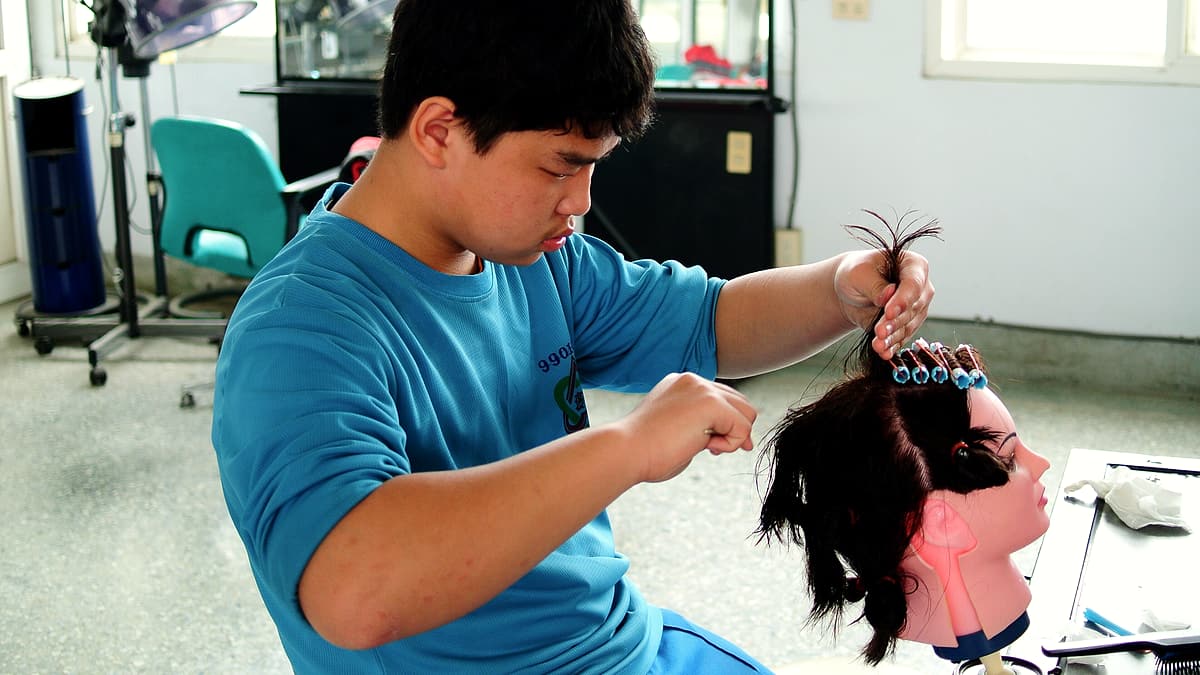
The rule in short
Every state sets a minimum number of training hours before a candidate may sit the licensing examination, and most allow the hours to come from an approved school or from a board-registered apprenticeship in a licensed establishment. School hours are certified by the school; apprentice hours are certified by a supervising licensee who must be approved and present. Hours worked lawfully in another state can often be converted, but only on the ratio the destination state sets.
A candidate reaches the licensing examination by completing a set number of training hours, and most states accept those hours from either an approved school or a registered apprenticeship. The totals differ by service and by state, and the two routes are documented by different people.
Hours are the spine of personal care licensing. Almost every other requirement, from the examination application to reciprocity with another state, is expressed in hours. Getting them recorded properly matters more than getting them quickly, because a board will not issue a license on hours it cannot verify.
Two routes to the same examination
The school route is the common one. A candidate enrolls in a program that the licensing board has approved, completes the curriculum the board sets, and receives a certified transcript of hours. The apprentice route places the candidate in a licensed establishment under a supervising licensee, with hours logged as the work is done. California's statute lists both, along with credit for practice performed outside the state and crossover courses for people already licensed in a neighboring category.
The hour totals are set by state law and vary widely. Florida requires a minimum of 1,200 hours for a cosmetologist, while other states set the figure closer to 1,500 or 1,600. Specialty licenses run much shorter, often a few hundred hours for nail care or skin care. Apprentice totals are usually higher than school totals for the same license, on the reasoning that supervised commercial work is less concentrated than classroom instruction.
Neither route changes the examination. Both candidates sit the same written and practical papers, and both are judged on the same passing standard. The route only determines how the eligibility is proved. What it does change is cost and speed: school is paid for up front and finishes on a fixed schedule, while an apprenticeship is usually paid work that takes longer to accumulate. Boards do not weigh one route above the other when a completed application arrives, and a license issued on apprentice hours carries no marking to say so.
How school hours are counted
A board-approved school is not simply any school that teaches the subject. California defines an approved school as one first approved by the board and then approved by the state's private postsecondary education authority, or a public school. That double approval matters, because a school can lose one and not the other, and hours earned after approval is withdrawn may not count.
Schools record hours by category rather than as one total. A curriculum divides the required time between theory and practical operations, and within practical work between mannequin practice and services performed on paying clients under supervision. A transcript that shows the right grand total but the wrong split can still fail an application. Boards also cap the hours that may be earned in a single day, so time cannot be compressed by working double shifts.
The board keeps power over the school itself. Approval can be revoked or suspended for incompetence, gross negligence, disregard for the health of patrons, refusing inspection, or fraudulent misrepresentation in obtaining licensure. Those grounds are aimed at the operator, but the consequences fall on students holding partial transcripts.
The apprentice route and its supervisor
An apprentice is a licensee in their own right. California's definition is blunt about it: an apprentice is a person licensed by the board to learn the trade in a licensed establishment under the supervision of a licensee the board has approved. Two conditions follow from that. The apprentice must be supervised at all times while performing services, and the apprentice may never be the only individual working in the establishment. An unsupervised apprentice is treated as practicing unlicensed.
Being a licensed stylist does not make someone eligible to supervise an apprentice. Most boards require a separate approval, often conditioned on a minimum number of years in practice, a clean disciplinary record and a cap on how many apprentices one person may supervise at once. Hours signed by a licensee who was never approved as a supervisor are commonly rejected in full, and the apprentice, not the shop, absorbs the loss.
Apprentice hours are reported to the board on a schedule, usually monthly or quarterly, on forms the board publishes. The report identifies the supervisor, the establishment and the categories of work performed. Filing late is the most frequent problem, because a board that receives a year of hours in one envelope has no way to confirm supervision was continuous.
Hours earned in another state
Practice lawfully performed elsewhere is often convertible. California credits practice outside the state at a fixed ratio, treating three months of practice as the equivalent of 100 hours of training, and applies the same idea to candidates who already hold a barber license and complete a crossover course. Other states convert on their own ratios or simply accept a specified number of years of licensed practice in place of a transcript.
| Route | Who certifies the time | What is usually required alongside it |
|---|---|---|
| Approved school program | The school registrar, on a board form | Board approval of the school plus postsecondary approval or public status |
| Registered apprenticeship | The approved supervising licensee | An apprentice permit, continuous supervision, periodic hour reports |
| Crossover course | The school delivering the crossover | An existing license in the adjacent category |
| Out-of-state practice | The other state's board, by certified license history | Conversion at the destination state's ratio, often with a gap rule |
| Public or government program | The program operator | Recognition of the program in the state's licensure statute |
Conversion is where reciprocity usually breaks down, and the mechanics of that are covered in the examination and moving a license between states. What converts is time spent lawfully licensed, so unlicensed practice never counts, however skilled the practitioner.
Proving hours when the record is gone
Schools close, and records go with them. Most states now require a closing school to deposit student records with the board or with the state education authority, and that repository is the first place to ask. Where no deposit was made, boards will usually accept a combination of secondary evidence: enrollment agreements, tuition receipts, financial aid records, attendance printouts and an affidavit from an instructor.
The same problem appears on the apprentice side when an establishment closes or a supervisor dies. Copies of the hour reports already filed with the board are the strongest evidence, which is the argument for filing on time and keeping duplicates. Establishments are separately obliged to keep records, a duty explained in registering the shop as well as the person, and a booth renter's position on record keeping is set out in booth rental and who holds the license.
Where the services themselves are exempt from licensing, no hours are needed at all, which is worth confirming before enrolling. That boundary is drawn in which personal care services need a license.
Points to carry away
- A minimum hour total must be completed before a candidate may take the licensing examination.
- Approved schools must be sanctioned by the licensing board and usually by a private postsecondary education authority as well.
- An apprentice holds a board-issued permit and must be supervised at all times by an approved licensee.
- An apprentice may not be the only person working in an establishment while performing services.
- Practice lawfully performed in another state is often converted into hours at a fixed ratio set by statute.
Questions readers ask
Do hours expire if a candidate stops partway through?
Many boards attach a shelf life to completed hours, often between two and five years, after which a candidate must either refresh them or start again. Others treat hours as permanent once certified but require the examination to be taken within a set period after completion. Because the rule sits in board regulations rather than the statute, it is one of the details most often missed by someone returning after a gap. The school or board that holds the transcript is the only reliable place to check the current standing of old hours.
Can an apprentice be paid while completing hours?
Yes in most states, and the apprentice is usually treated as an employee of the establishment rather than a student. That matters because wage and hour law applies in the ordinary way, and the supervising licensee cannot treat unpaid training time as a condition of signing off hours. Some states cap the services an apprentice may perform for compensation until a certain number of hours has been logged. The board permit sets what may be done; employment law sets what must be paid.
What happens to hours if the supervising licensee loses their license?
Hours already certified and filed with the board normally stand, because they were earned under an approved supervisor at the time. Hours accrued after the supervisor's license lapsed or was suspended usually do not count, and continuing to work under an unlicensed supervisor can be treated as unlicensed practice by the apprentice as well. The safest step is to file hour reports on the schedule the board sets rather than saving them to the end, so a break in supervision is caught while it can still be corrected.
Sources
- California Business and Professions Code section 7321Sets the age and education thresholds and the alternative routes to examination, including the apprenticeship program.
- California Business and Professions Code section 7332Defines an apprentice, requires supervision at all times and bars an apprentice from working alone.
- California Business and Professions Code section 7362Sets what counts as a board-approved school and the grounds on which approval is withdrawn.
- Florida Statutes section 477.019, cosmetologist licensureRequires a minimum of 1,200 hours of training and sets when a candidate may sit the examination.
- Revised Code of Washington 18.16.030Gives the director power to establish curricula for both students and apprentices.
- Texas Department of Licensing and Regulation, barberingState agency page collecting license applications, examination information and out-of-state guidance.
National Attorney Hub is a publication, not a law firm. This article states general rules and cites its sources; it is not advice about any particular case, and the law differs by state and changes over time.
More in Salons & Personal Care
The Examination and Moving a License Between States
Personal care licensing examinations are set in two parts, a written theory paper covering law and sanitation and a practical paper performed on a mannequin or model. A license does not travel by itself. A practitioner moving states applies for licensure by endorsement, and the receiving board decides whether the original training hours, examination and current standing meet its own standard. Where they fall short, the usual remedy is added hours or a re-examination.
Which Personal Care Services Need a License
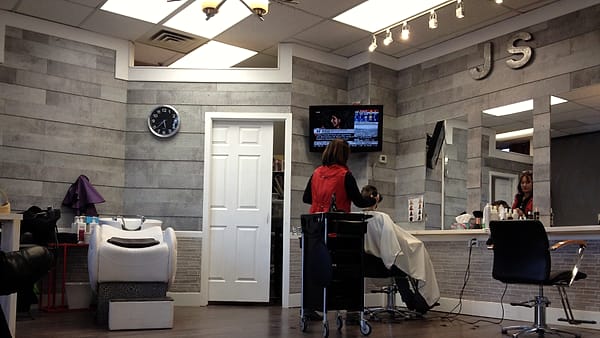
Nearly every state licenses the services that cut, color, chemically treat or abrade hair, skin and nails when they are performed for compensation. Statutes then carve out named exemptions, most commonly shampooing, natural hair braiding, hair wrapping, threading and basic makeup application. Tattooing, piercing and massage sit under separate schemes with their own permits. Working outside the scope printed on a license is itself a violation.
Working From Home or a Mobile Unit
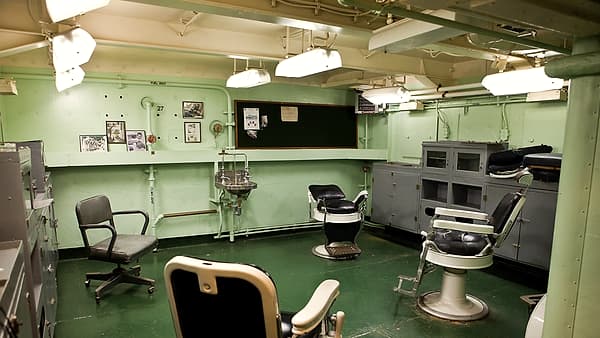
Mobile personal care work is licensed rather than unregulated. Most states license a self-contained vehicle as a mobile unit, requiring a permanent base address, a floor plan, water and waste systems and an inspection before approval, and often a filed itinerary. Home-based work is licensed as an establishment and usually requires an entrance separate from living space, dedicated facilities and zoning approval. Work at a client's home is lawful only where the statute names the situation.