Tattoo and Body Art Permits
Body art sits outside the cosmetology board in most states and under the health department instead. That means a different application, a different inspector and a permit structure that separates the artist from the room the artist works in.
The rule in short
Tattooing and piercing are usually regulated by a state health department rather than a cosmetology board. An artist license requires completion of an approved bloodborne pathogen and communicable disease course and, in some states, an examination on it. A separate establishment license covers the premises, is issued per location, expires annually and cannot be transferred. Temporary licenses exist for conventions and guest work, with short fixed terms and their own inspection.
Tattooing needs two licenses in most states: one for the artist and one for the place. Both have to be current at the same time, and an artist with a perfect personal license working in an unlicensed room is still working unlawfully.
The split confuses people arriving from hairdressing, where a single board handles everything. Body art usually sits with the state health department, because the risk being regulated is transmission of bloodborne infection rather than skill with a tool. That shapes the whole scheme: training is about pathogens, inspection is about sterilization, and the paperwork is about traceability.
The artist license
The artist license is personal and portable within the state. Florida's version is a clean example of the standard pattern. An applicant submits proof of successful completion of a department-approved education course on bloodborne pathogens and communicable diseases, then proof of passing an approved examination on the material in that course. The statute expressly allows both to be completed in person or through an internet site, which is why the training market is largely online.
What the license does not test is artistic skill. No state examines line work or shading. The whole credential is about infection control, cross-contamination, sharps handling and knowing when not to proceed. Renewal is usually annual and often requires the training to be refreshed rather than simply paid for.
Age and background conditions attach in some states, as does a requirement to hold current first aid or cardiopulmonary resuscitation certification. Where a state licenses piercing separately from tattooing, an artist doing both holds both, and the training course for each may differ. The related age rules for clients are dealt with in piercing, minors and parental consent.
The establishment license
The premises license is where most of the conditions live. Florida requires a license for the establishment and states directly that a person may not tattoo the body of any human being except at a licensed establishment or a licensed temporary establishment. The application identifies the business registration, the location, the operator and a registered agent for service of process, and the department issues the license once the application is complete, the fee is paid and the establishment complies with local building, occupational, zoning and health codes.
Three features of that license catch operators out. It is issued per location, so a second studio is a second application rather than an addition. It is non-transferable between operators or entities, so buying a studio does not buy its license. And a change of location requires notice to the department rather than a quiet move. The same structure appears in salon licensing, described in registering the shop as well as the person.
A visiting artist who is licensed in another state, or licensed in this state but attached to a different studio, is a familiar part of the trade and a frequent source of citations. Statutes generally require an artist to work only at a licensed establishment, and several states add a separate guest artist license with its own application and short term. Booking a guest without checking which of the two rules applies puts both the guest and the host studio in breach at the same time.
Events, conventions and temporary licenses
Conventions are handled by a temporary establishment license. Florida caps its temporary license at a period not to exceed fourteen consecutive days and issues it for the specific event venue. The department inspects permanent establishments at least annually, and inspects temporary establishments before and during the event they cover, which is a heavier touch than a fixed studio receives on a normal cycle.
Temporary licensing does not relax the underlying standards. Sterile single-use needles, barrier protection on every surface a gloved hand touches, a sharps container, hand washing facilities and client records are all required at a convention booth in the same terms as in a studio. What changes is who supplies the infrastructure, and event organizers usually take that on as a condition of renting a booth.
| License | Who holds it | Term and scope |
|---|---|---|
| Tattoo artist license | The individual performing the work | Personal, renewed periodically, valid only inside licensed premises |
| Establishment license | The studio operator or company | One address, annual renewal, non-transferable |
| Temporary establishment license | The event operator or artist | A defined venue for a short fixed period, inspected before and during |
| Guest artist license | A visiting artist | Short term, tied to a named host establishment in states that require it |
| Body piercing salon license | The salon operator | Separate scheme with its own sterilization and record rules |
Inspection, sterilization and records
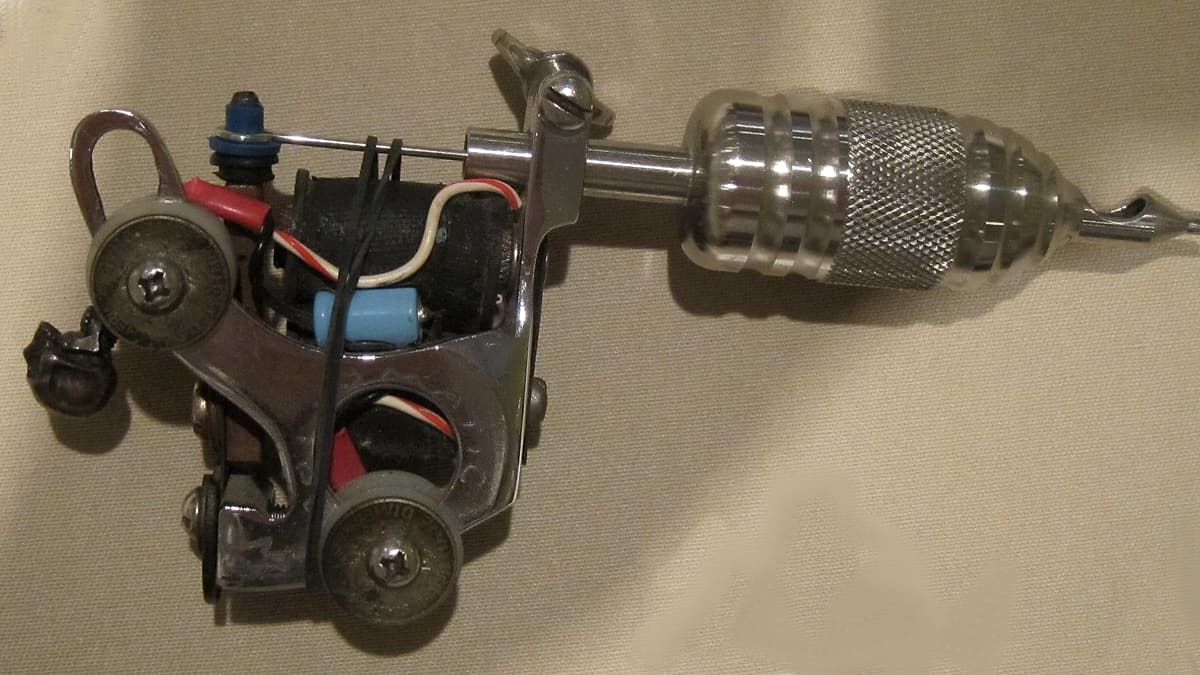
Operating requirements are written to be checked visually. Licenses for the establishment and for each artist must be displayed where the public can see them while the artist is practicing. The premises must be kept sanitary and comply with health codes, and the operator must allow the department to inspect. Departments are directed to adopt rules covering sterilization procedures, equipment specifications for tattoo machines, customer notification, record keeping and physical facility standards.
Sterilization is the part that differs most from a salon. Needles and tubes are single use or steam sterilized in a validated autoclave, and an autoclave in service normally has to be tested with a biological indicator on a set schedule, with the results kept. Ink is decanted into single-use caps and never returned to the bottle. Barrier film goes on the machine, cords, lamp handles, clip cord and spray bottles. The parallel rules for salons are set out in sanitation, disinfection and equipment rules.
Where the studio has employees, the federal bloodborne pathogens standard applies on top of the state permit. It requires a written exposure control plan reviewed each year with input from frontline workers, engineering controls such as sharps disposal containers, protective equipment at no cost, hepatitis B vaccination offered free within ten working days of assignment, and training at assignment and at least annually afterward. Records of vaccination, training and any sharps injury have to be kept.
What a permit does not cover
A body art license authorizes a procedure, not a medical practice. It does not permit removal of tattoos by laser, which most states treat as a medical or specially licensed activity. It does not permit implantation of objects under the skin, tongue splitting or scarification in a number of states, each of which is either separately regulated or prohibited outright. Nor does it reach injection of any substance, which sits firmly on the medical side of the line.
The permit also says nothing about the ink itself. Pigments are regulated as cosmetics at the federal level rather than approved for injection, and a studio that mixes its own or imports unlabeled product carries the risk of that decision. State rules generally require inks to be from a commercial supplier, kept in original labeled containers, and recorded by batch on the client file so a recall can be traced to the people affected.
Consent is a separate question from licensing. A signed consent form is required in most states and normally has to record the risks explained, the aftercare given and confirmation that the client is not impaired. It does not license anything, and it does not turn an unlawful procedure into a lawful one. Where the client is a minor the form is not enough on its own, which is the subject of piercing, minors and parental consent.
Points to carry away
- The artist and the establishment are licensed separately, and both must be current for lawful work.
- Approved bloodborne pathogen and communicable disease training is a condition of the artist license in most states.
- Tattooing is generally permitted only inside a licensed establishment, including for visiting guest artists.
- Temporary establishment licenses cover conventions and events and run for a short fixed period.
- Establishment licenses are issued per location, are non-transferable and require notice of any change of location.
Questions readers ask
Is permanent makeup treated as tattooing?
In most states it is, because the technique places pigment into the skin with a needle regardless of what it is called. That usually pulls microblading, cosmetic eyeliner and lip blush under the body art statute rather than the cosmetology act, requiring the artist license and an establishment license for the room. A handful of states have written a separate permanent cosmetics permit with its own training requirement. Practitioners who trained under a cosmetology board and then added permanent makeup are the group most often caught unlicensed.
Can a tattoo be done at a client's home or at a private party?
Generally no. Body art statutes usually confine tattooing to a licensed establishment, and the establishment license attaches to a specific address that has been inspected. Home visits therefore fall outside the permit even when the artist is fully licensed. The narrow exception is the temporary establishment license issued for a convention or similar event, which covers a defined venue for a short period and is inspected before and during the event rather than left unsupervised.
What records must a studio keep about each client?
Most states require a client record for every procedure, held for a set number of years. It typically names the client, records the identification checked, describes the procedure and its location on the body, identifies the artist, and lists the inks and needles used by lot or batch. Where the client is a minor and the state permits the work with consent, the notarized parental consent form is retained with the record. Inspectors ask for these by sample, and gaps are cited even where the procedures themselves were sound.
Sources
- Florida Statutes section 381.00775, tattoo artist licenseRequires completion of an approved bloodborne pathogen course and passage of an examination on it.
- Florida Statutes section 381.00777, tattoo establishment licenseConfines tattooing to licensed establishments, sets annual terms and caps temporary licenses at fourteen consecutive days.
- Florida Statutes section 381.00779, operating requirementsRequires licenses to be displayed, confines artists to licensed premises and sets annual inspection duties.
- Florida Statutes section 381.00789, rulemakingDirects the department to adopt rules on training, sterilization, equipment, records and facility standards.
- 29 CFR 1910.1030, bloodborne pathogensSets the federal exposure control plan, training, protective equipment and vaccination duties for employees.
- OSHA, bloodborne pathogens standardThe agency text, including sharps handling, post-exposure evaluation and record retention.
National Attorney Hub is a publication, not a law firm. This article states general rules and cites its sources; it is not advice about any particular case, and the law differs by state and changes over time.
More in Salons & Personal Care

The Examination and Moving a License Between States
Personal care licensing examinations are set in two parts, a written theory paper covering law and sanitation and a practical paper performed on a mannequin or model. A license does not travel by itself. A practitioner moving states applies for licensure by endorsement, and the receiving board decides whether the original training hours, examination and current standing meet its own standard. Where they fall short, the usual remedy is added hours or a re-examination.
Which Personal Care Services Need a License
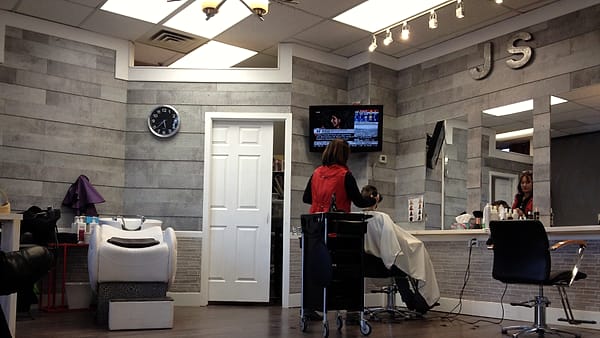
Nearly every state licenses the services that cut, color, chemically treat or abrade hair, skin and nails when they are performed for compensation. Statutes then carve out named exemptions, most commonly shampooing, natural hair braiding, hair wrapping, threading and basic makeup application. Tattooing, piercing and massage sit under separate schemes with their own permits. Working outside the scope printed on a license is itself a violation.
Working From Home or a Mobile Unit
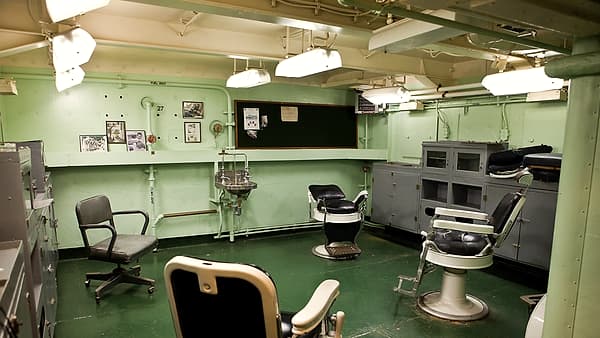
Mobile personal care work is licensed rather than unregulated. Most states license a self-contained vehicle as a mobile unit, requiring a permanent base address, a floor plan, water and waste systems and an inspection before approval, and often a filed itinerary. Home-based work is licensed as an establishment and usually requires an entrance separate from living space, dedicated facilities and zoning approval. Work at a client's home is lawful only where the statute names the situation.