Sanitation, Disinfection and Equipment Rules
Every tool in a shop falls into one of three buckets: thrown away after one client, cleaned and disinfected before the next, or not permitted at all. Almost every sanitation citation traces back to putting a tool in the wrong bucket.
The rule in short
State sanitation rules classify implements by whether they can be cleaned. Porous items that touch skin are single use and must be discarded after one client. Non-porous implements are washed, then immersed in a registered disinfectant for the contact time printed on the label. Certain tools, notably credo blades and some foot spa inserts, are banned outright. Where blood is exposed, the federal bloodborne pathogens standard applies alongside the board's own rules.
Sanitation rules sort every tool in a shop into three groups: discard after one client, clean and disinfect between clients, or do not use at all. Which group a tool belongs to is decided by whether it can actually be cleaned, not by how expensive it was.
This is the single largest source of violations at inspection, and it is also the area where habits picked up in one shop travel badly into another. Boards write the rules in regulations rather than in the statute, so they change more often than the licensing provisions and differ more between states. The underlying logic, though, is the same nearly everywhere.
Three groups of tools
Porous items absorb liquid and cannot be reliably cleaned. Emery boards, buffers, orangewood sticks, foam toe separators, cotton, wooden applicators, sponges and paper files all sit here. They touch one client and go in the trash. The rule is not softened by the item looking clean afterward, because the concern is what has soaked into the material rather than what is on the surface.
Non-porous implements can be cleaned and disinfected. Metal shears, clipper blades, tweezers, nippers, cuticle pushers, combs, brushes, capes with a non-porous surface, and the bowls and basins that hold water all fall here. Each is washed with soap and water first to remove visible soil, rinsed, dried, then fully immersed in a disinfectant registered for the purpose, for the contact time printed on that product's label.
The third group is prohibited outright. Credo blades and other razor-type callus shavers are banned in a long list of states because they cut living tissue. Some states also ban methyl methacrylate monomer in nail products, certain foot spa inserts that cannot be cleaned, and any implement that has been modified so a manufacturer's cleaning instructions no longer apply. Being careful with a banned tool is not a defense; the tool being present is the violation.
How disinfection is judged
Inspectors do not test the chemistry. They check four visible things. The product must be registered for use as a disinfectant and labeled for the claims the shop is relying on. The solution must be mixed at the ratio the label states, which means a measuring device has to be present rather than a poured guess. The implements must be fully submerged rather than resting half in. And the contact time must be observed, which is why a shop that pulls shears out after twenty seconds fails even with a correct solution.
Storage is scored separately from disinfection. Clean implements go in a closed, clean, labeled container or drawer; soiled implements go in a separate labeled container until they are processed. Mixing the two, or storing clean implements loose on a counter with hair on it, undoes the disinfection that was performed correctly a minute earlier.
Every registered disinfectant states a contact time, and it is measured from the moment the implement is fully immersed in a fresh solution. Ten minutes is common for salon products; some are shorter, some longer. The practical consequence is that a station cannot run on one set of shears. A shop that books back-to-back appointments needs enough duplicate implements to keep one set soaking while another is in use, and inspectors have learned to count them.
Water, basins and foot spas
Whirlpool foot spas caused enough serious infections that most states wrote rules specifically for them. The standard pattern has three layers. After every client, the basin is drained, cleaned of debris, scrubbed with a detergent and then disinfected with the jets running for the label contact time. At the end of each day, the screen, filter or impeller is removed and the trapped debris cleaned out. At longer intervals, usually weekly, a deeper cleaning is performed and left overnight.
Each of those steps has to be recorded. Foot spa cleaning logs are the one written record almost every state requires, kept on the premises for a set period and produced on demand. An inspector who finds a spotless basin and no log will normally still write the violation, because the rule is about the record as much as the cleaning. Pipeless basins and single-use liners reduce the burden but do not remove the logging duty in most states.
Ordinary water carries its own rules. Stations generally need hot and cold running water, sinks used for services may not be shared with a toilet room, and shampoo bowls have to drain properly rather than pooling. Those conditions come from building and health codes as much as from the board, and they are the reason a shop fitted into a former retail unit often needs plumbing work before it can be licensed at all.
Products, labels and storage
Every product on the floor has to be identifiable. Containers that have been decanted from a bulk supply need a label naming the contents, and the original manufacturer's label has to be available for anything in use. Inspectors check this because an unlabeled bottle makes it impossible to know whether the disinfectant is at the right dilution or whether a chemical service is being performed with a product the state restricts.
Storage rules separate categories that should not meet. Clean linens go in a closed cabinet; used linens go in a covered receptacle and are laundered rather than shaken out and reused. Food and drink stay out of the service area and out of any refrigerator holding products. Personal items, including handbags and street clothing, are kept away from implements and towels. Pets other than service animals are excluded from the premises in most states.
Product restrictions themselves shift over time. Some states ban particular nail monomers, cap the strength of chemical exfoliants an unlicensed or specialty licensee may use, and prohibit devices that penetrate the skin outside a medical setting. A product that is legal to sell is not automatically legal to use in a licensed establishment, and the board's regulations rather than the supplier's catalog are the place that answer is written down.
| Item | Category | What the rule requires |
|---|---|---|
| Emery board, buffer, orangewood stick | Single use | Discard after one client, no cleaning permitted as a substitute |
| Shears, clippers, tweezers, nippers | Disinfectable | Clean, then immerse in registered disinfectant for the label contact time |
| Combs, brushes, capes and neck strips | Mixed | Non-porous items disinfected; porous neck strips discarded |
| Whirlpool foot spa | Disinfectable with a log | Clean and disinfect after each client, deep clean on schedule, record every cycle |
| Credo blade or callus shaver | Prohibited in many states | May not be present on the premises at all |
| Item contaminated with blood | Contaminated | Porous items discarded; others disinfected with a bloodborne pathogen claim |
Blood exposure and the federal layer
Board sanitation rules stop at the client. The federal bloodborne pathogens standard picks up where employees are concerned, and it applies to any workplace where exposure to blood is reasonably anticipated. That reaches shops offering shaving, nail work, electrolysis, piercing and tattooing far more clearly than it reaches a shop doing blow-dries only.
The standard requires a written exposure control plan reviewed annually, engineering and work practice controls such as sharps containers, protective equipment supplied at no cost, and training at initial assignment and at least once a year afterward. It also requires hepatitis B vaccination to be offered free of charge within ten working days of assignment, with a signed declination if the worker refuses. Records of vaccination, training and any exposure incident have to be kept.
Body art operates under an even tighter version of the same idea, which is set out in tattoo and body art permits. Sanitation failures are also the leading category of finding on a routine visit, described in what a salon inspection looks for, and the duty to keep the premises compliant sits with the establishment license holder rather than with individual stylists, a point covered in registering the shop as well as the person.
Points to carry away
- Porous implements that contact skin are single use and must be discarded rather than cleaned.
- Non-porous implements must be cleaned first and then immersed in a registered disinfectant for the label contact time.
- Disinfectant solutions must be mixed to the label ratio, dated in use terms and replaced when contaminated or exhausted.
- Some implements are prohibited outright regardless of how well they are cleaned.
- Where blood exposure is reasonably anticipated the federal bloodborne pathogens standard applies to employees.
Questions readers ask
Does an ultraviolet cabinet count as disinfection?
No. Ultraviolet cabinets are treated as clean storage, not as a disinfection method, because the light reaches only exposed surfaces and cannot penetrate hinges, joints or any soil left on the tool. Boards that permit them require the implements to be cleaned and disinfected first, then stored in the cabinet. Placing soiled implements straight into a cabinet and calling them disinfected is a common citation. The same logic applies to dry heat cabinets that are not validated sterilizers.
How long must a disinfectant solution be kept before it is replaced?
The label governs, not habit. Most registered salon disinfectants state a use life once mixed, commonly one day for some concentrates and longer for others, and all of them require replacement sooner if the solution becomes cloudy, visibly soiled or diluted by wet implements. Inspectors look for a solution that is clear, at the right level to cover the implements fully, and in a covered container. A container with hair floating in it fails regardless of when it was mixed.
What must be done after a client is cut and bleeds?
The immediate steps are to stop the service, apply a barrier and treat the wound with a single-use product, then handle the implement as contaminated. Non-porous implements are cleaned, disinfected with a product effective against bloodborne pathogens, and only then returned to service. Anything porous is bagged and discarded. Where the shop has employees, the federal bloodborne pathogens standard adds an exposure control plan, training, protective equipment at no cost and a post-exposure evaluation if a worker is exposed.
Sources
- 29 CFR 1910.1030, bloodborne pathogensRequires an exposure control plan, engineering controls, protective equipment and training where exposure is anticipated.
- OSHA, bloodborne pathogens standardThe agency's own text of the standard, including the hepatitis B vaccination and record-keeping duties.
- Florida Statutes section 381.0075, body-piercing salonsStates the legislative purpose of preventing the spread of infectious disease and sets sterilization and sanitation duties.
- California Board of Barbering and Cosmetology, laws and regulationsThe board's compilation of the act and the regulations that contain the disinfection and equipment rules.
- Revised Code of Washington 18.16.030Gives the director authority to establish safety and sanitation standards for shops, schools and practitioners.
- Florida Statutes section 477.025, salon licensure and inspectionAuthorizes board rules for the periodic inspection of salons, which is where sanitation rules are enforced.
National Attorney Hub is a publication, not a law firm. This article states general rules and cites its sources; it is not advice about any particular case, and the law differs by state and changes over time.
More in Salons & Personal Care
The Examination and Moving a License Between States
Personal care licensing examinations are set in two parts, a written theory paper covering law and sanitation and a practical paper performed on a mannequin or model. A license does not travel by itself. A practitioner moving states applies for licensure by endorsement, and the receiving board decides whether the original training hours, examination and current standing meet its own standard. Where they fall short, the usual remedy is added hours or a re-examination.
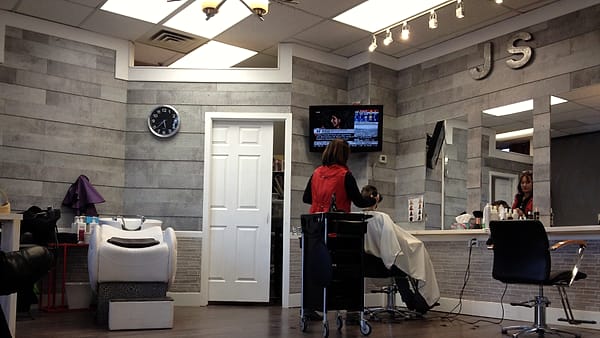
Which Personal Care Services Need a License
Nearly every state licenses the services that cut, color, chemically treat or abrade hair, skin and nails when they are performed for compensation. Statutes then carve out named exemptions, most commonly shampooing, natural hair braiding, hair wrapping, threading and basic makeup application. Tattooing, piercing and massage sit under separate schemes with their own permits. Working outside the scope printed on a license is itself a violation.
Working From Home or a Mobile Unit
Mobile personal care work is licensed rather than unregulated. Most states license a self-contained vehicle as a mobile unit, requiring a permanent base address, a floor plan, water and waste systems and an inspection before approval, and often a filed itinerary. Home-based work is licensed as an establishment and usually requires an entrance separate from living space, dedicated facilities and zoning approval. Work at a client's home is lawful only where the statute names the situation.