Uniforms, Badges and Looking Like the Police
The offense is not claiming to be a police officer. In most states it is inducing the belief that one is, which a badge, a shoulder patch, a shade of paint or a single word on a car door can accomplish without anyone saying anything at all.
The rule in short
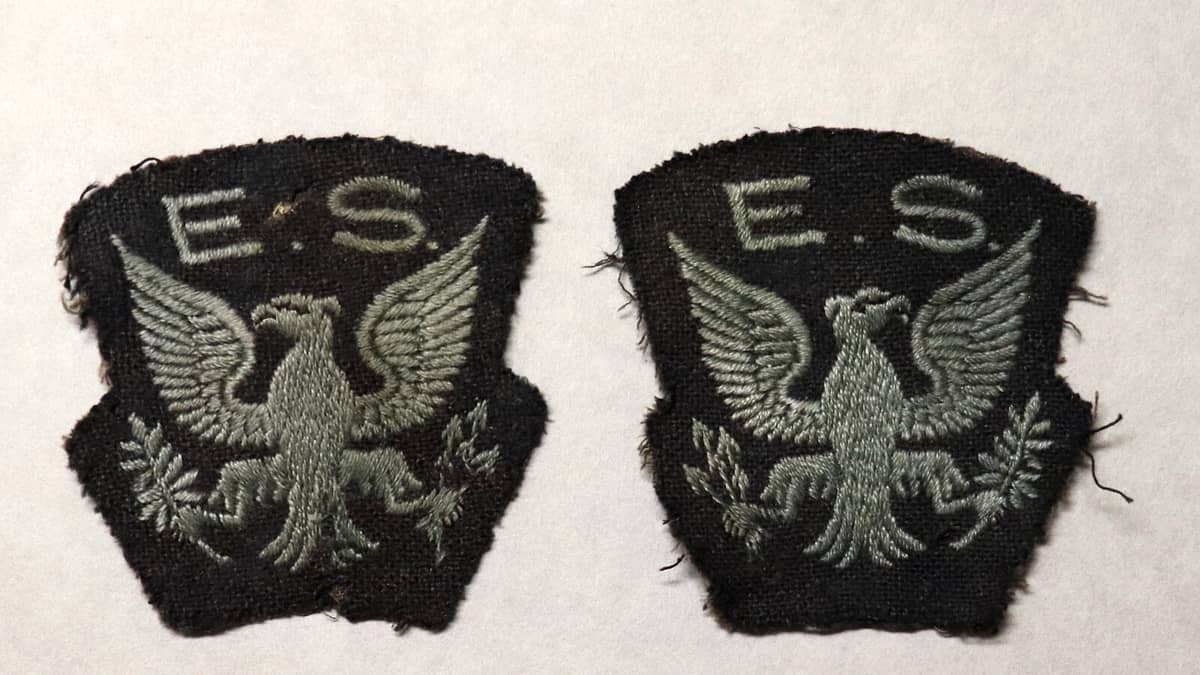
State statutes require a private security uniform to identify the employing agency and prohibit insignia, badges, titles, vehicle markings and lighting that would lead a reasonable person to believe the wearer holds public office. Impersonation offenses are usually satisfied by inducing that belief rather than by an express claim, and federal provisions add separate offenses for pretending to act under the authority of the United States and for misuse of official badges and identification cards.
A private uniform has to identify the employer and must not suggest public office. In most states the impersonation offense is committed by inducing the belief that the wearer is a police officer, which a badge, a patch or a painted car can do without a word being spoken.
This is one of the few areas where enforcement is routine rather than exceptional. Members of the public complain about it, other officers notice it, and the evidence is a photograph. It is also one of the easiest exposures to remove, because it is entirely a design decision.
What the uniform must carry
Most states require a private security uniform to identify the employing agency. Florida's provision is direct: a security officer performs duties in a uniform bearing at least one patch or emblem visible at all times which clearly identifies the employing agency, and returns the uniform and equipment immediately on leaving employment. Nonuniform work is permitted only on a limited special assignment basis where the client's requirements make it necessary.
The purpose is not branding. It is that a member of the public confronted by someone in a uniform should be able to tell instantly who they work for, and should be able to complain to that company afterwards. A uniform that identifies nobody is treated as concealing the answer, and it is the first thing an inspector photographs.
The impersonation offense
State statutes are drafted to catch impression rather than declaration. California makes it a misdemeanor for a person other than one who by law is given the authority of a law enforcement officer to willfully wear, exhibit or use the authorized uniform, insignia, emblem, device, label, certificate, card or writing of a law enforcement officer, with intent to fraudulently impersonate one or to fraudulently induce the belief that they are one. A separate subdivision addresses the badge specifically.
The intent element is what operators misread. It is satisfied by an intention to induce the belief, and a court infers intention from the choices made: the shade of the shirt, the star on the chest, the word on the sleeve, the manner of the approach. A guard who says "I am not a police officer" while wearing a uniform designed to look like one has not cured anything, and licensing statutes in states such as Washington add a flat prohibition on public law enforcement insignia that does not require any intent at all.
| Item | Ordinarily acceptable | Ordinarily prohibited |
|---|---|---|
| Shoulder patch | Company name and a neutral emblem | State seal, county name, or a design copying an agency patch |
| Chest insignia | Company badge clearly marked as private security | Seven-point star, shield resembling a police badge, or the word police |
| Title used | Security officer, guard, or the company's own role name | Detective, agent, marshal, or officer used to suggest public office |
| Vehicle markings | Company name, phone number, plain color scheme | Agency-style striping, the word patrol or enforcement, imitation seals |
| Vehicle lighting | Amber warning lights where the state permits them | Red or blue lights, sirens, and other restricted equipment |
Badges, titles and cards
Badges attract more trouble than any other item. Some states prohibit private licensees from carrying one at all. Others permit a badge that could not reasonably be mistaken for a public one, and a few prescribe the wording. Presenting a badge to gain entry, to obtain information or to persuade someone to comply is the classic fact pattern behind an impersonation charge, and it usually appears alongside an allegation of obtaining records by deception.
Titles work the same way. Detective, agent, marshal, inspector and constable all carry public associations in ordinary speech, and their use on a card or a door invites the argument. Identification cards are separately regulated: most states require the licensee's own card to be carried on duty and produced on request, and several make it an offense to display anything designed to resemble a government credential.
Uniforms are seen by a few people at a time. A vehicle is seen by everyone on the road, and a car that a driver pulls over for produces an immediate complaint. Companies that adopt agency-style striping, spotlights or push bars generate more enforcement contact than any other design choice, and the vehicle code offense is separate from the impersonation offense, so both can be charged.
Equipment carried on the belt raises the same question in a smaller way. Handcuffs are lawful for private security in most states, but combined with a star-shaped badge and a dark blue uniform they contribute to the overall impression a court assesses. Radios with agency call signs, tactical vests marked only with large block lettering, and jackets bearing a single word in agency style have all featured in prosecutions. The test is cumulative rather than item by item.
The federal layer
Two federal provisions apply on top of state law. One makes it an offense to falsely assume or pretend to be an officer or employee acting under the authority of the United States, and to act as such or demand anything of value in that pretended character. The other addresses official badges, identification cards and other insignia, prohibiting manufacture, sale and possession of anything that is a colorable imitation of a federal credential.
Those provisions matter to private operators for a practical reason. Uniforms and badges are widely sold, including items that copy federal designs, and possessing one can be an offense whether or not it is ever used. The safest procurement rule is that anything a supplier describes as looking official is the item to refuse.
Company names carry the same risk. A trading name containing a term such as bureau, agency, department, federal or state can suggest a public body even where every other element of the presentation is careful. Several licensing statutes give the board authority to refuse a name likely to mislead, and a company that has traded under a name for years may be told to change it at renewal. Checking the name against the board's rules before the signage is ordered is cheaper than repainting.
Why the design matters operationally
Beyond the criminal exposure, an official-looking presentation weakens every position a company holds. A detention conducted by someone dressed as a police officer is far harder to defend, because the person detained was not freely choosing to comply, which undermines the analysis set out under the power to detain and its limits. Consent obtained by a person who appeared to be an officer is treated as no consent at all.
Boards also treat presentation as a licensing matter in its own right, and a citation over insignia sits in the record alongside everything else. The registration requirements it attaches to are set out under security guard licensing and training, and the wider principle, that a license regulates a trade rather than conferring public authority, is covered under what an investigator license does not authorize.
Points to carry away
- Private security uniforms generally must carry a patch or emblem identifying the employing agency at all times.
- Impersonation statutes are commonly satisfied by conduct that induces the belief, without any spoken claim.
- Badges resembling public law enforcement badges are prohibited or tightly restricted in most states.
- Titles such as officer, detective, agent and marshal are restricted where their use suggests public office.
- Vehicle color schemes, door markings and emergency lighting are separately regulated by state vehicle codes.
- Federal law adds offenses for falsely pretending to act under United States authority and for misusing official insignia.
Questions readers ask
Is it lawful for a private investigator to carry a badge?
It depends on the badge and the state. Several states prohibit private licensees from carrying any badge at all; others permit one that could not be mistaken for a public law enforcement badge, and some require specific wording. A shield shape, a star, a state seal or the word police in any arrangement invites prosecution. Where a badge is permitted, presenting it in a way that suggests official authority still satisfies the impersonation statute, because the offense turns on the impression created.
Can a security company paint its vehicles to look official?
No, and this attracts enforcement more often than uniforms do. State vehicle codes restrict color schemes associated with law enforcement, the use of red and blue lights, spotlights, sirens and push bars, and several restrict the word patrol or enforcement on a vehicle. A company car that a member of the public pulls over for is evidence of the offense in itself. The safe design identifies the company clearly and looks like nothing a public agency operates.
What can a person do who was stopped by someone posing as an officer?
Report it to the police, because impersonation is a criminal offense and is investigated as one. Where the person appeared to be working for a security or investigative company, the state licensing board takes complaints separately and can act on the company as well as the individual. Recording what was seen, including any vehicle markings, plate number, badge wording and uniform patch, is what turns a report into a case, and photographs of the vehicle are usually decisive.
Sources
- California Penal Code § 538d — impersonating a law enforcement officerMakes wearing or using police uniform, insignia or a badge with intent to induce that belief a misdemeanor.
- Revised Code of Washington § 18.165.150 — licenses required; use of public law enforcement insignia prohibitedBans use of public law enforcement insignia by private investigative licensees and sets penalties.
- Florida Statutes chapter 493 — uniforms and identification for licenseesRequires a security officer's uniform to bear a patch identifying the employing agency and licenses to be carried.
- 18 U.S.C. § 912 — false personation of an officer or employee of the United StatesCriminalizes pretending to be an officer acting under the authority of the United States.
- 18 U.S.C. § 701 — official badges, identification cards and other insigniaProhibits manufacture, sale and possession of colorable imitations of federal badges and identification.
- California Business and Professions Code § 7582.2 — exemptions from the private security chapterDistinguishes public officers, whose insignia the private sector may not adopt, from private personnel.
National Attorney Hub is a publication, not a law firm. This article states general rules and cites its sources; it is not advice about any particular case, and the law differs by state and changes over time.
More in Investigators & Guards

Trespass, Fences and Where an Investigator May Lawfully Stand
Observation is lawful only from a place the observer may lawfully occupy. Public streets, sidewalks and open commercial parking areas carry the fewest restrictions. Ground close to a dwelling, enclosed by a fence and used for domestic life is treated as part of the home and is protected accordingly. A posted sign or an oral instruction to leave converts a lawful presence into criminal trespass, and several states impose civil liability for entering or using a device to capture private activity.
The Power to Detain and Its Limits
Security officers hold no police powers. The authority actually used is the merchant's privilege, a statutory rule permitting a merchant or their agent to detain a person for a reasonable time and in a reasonable manner on probable cause to believe merchandise was taken. It authorizes investigation and recovery only, permits nondeadly force, and collapses where the cause was weak or the hold too long.
Proof of Service That Holds Up
A return of service must record when the papers came to hand, the date, time and place of service, the manner used, the identity of the person served and their capacity, together with every document delivered, signed by the server. Missing facts or a missing signature can invalidate the service, though most states allow the return to be amended on application to the issuing court. A defective or false return supports a motion to quash and, later, a challenge to the judgment itself.