Which Child Care Arrangements Need a License
Three houses on the same street can run child care under three different rules. Whether a license is needed turns on where the care happens, how many children are there, how long they stay, and who is related to whom. None of it is decided by a national rule.
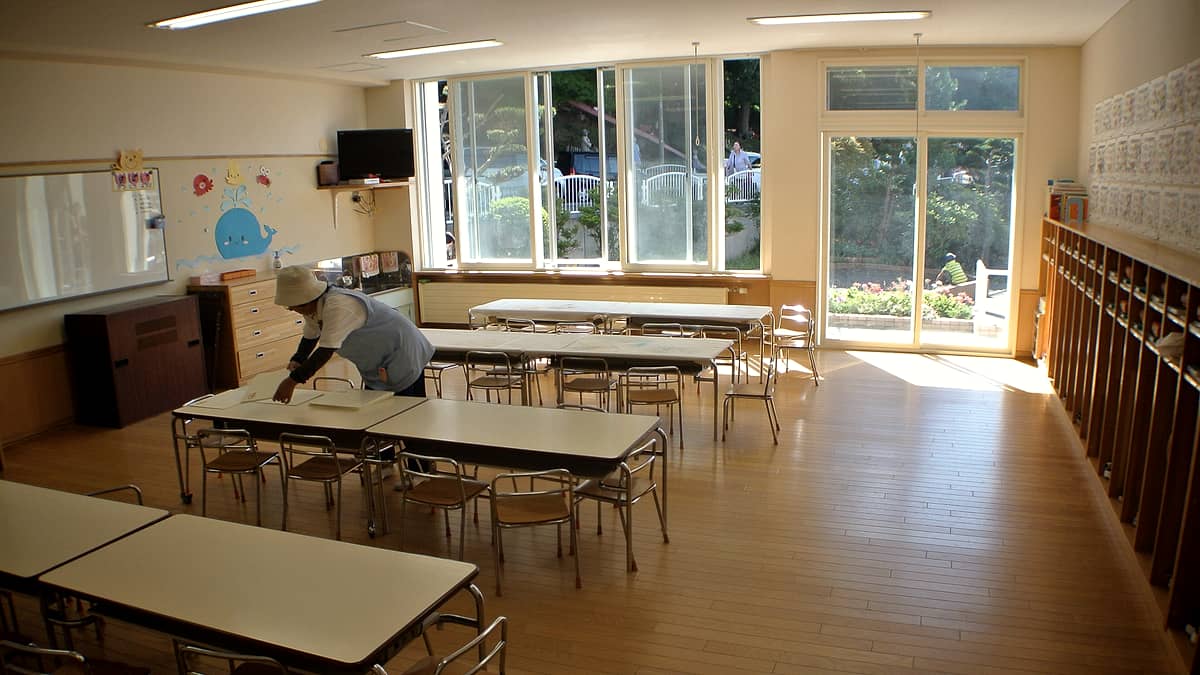
The rule in short
Child care licensing is state law. Most states divide arrangements into center-based care, family child care in a provider's home, and larger group homes, and set a threshold of unrelated children above which a license is required. Care by close relatives, care in the child's own home, short programs and certain school or religious programs are commonly exempt. Federal funding conditions require states to publish their licensing processes and their monitoring and inspection reports.
Child care licensing is state law. A licensed program also carries duties a private arrangement does not, from staffing ratios to the rules on sending a sick child home and when they may return. Whether a particular arrangement needs one turns on the setting, the number of unrelated children, the hours they are there, and the relationship between the adult and the children.
There is no national child care license. What exists federally is a set of conditions attached to the funding states receive, and those conditions shape how states license, how often they inspect, and what they must publish. The rules a parent actually has to read are written by the state, and they differ enough that a legal arrangement in one place needs a license in the next.
The three categories most states use
The first is center-based care: a program operating in premises used for that purpose, usually with staff grouped by age and a director. Centers are licensed everywhere and are the most heavily regulated setting.
The second is family child care, meaning care given in the provider's own home to a small number of children. Most states license or register these above a threshold number of unrelated children, and the threshold is the single most important number in the whole scheme. Below it, the arrangement is usually outside the licensing system entirely.
The third is a group home or large family home: the same setting with more children and often an assistant, sitting under stricter requirements than a small family home and closer to those for a center. Where a home crosses that second threshold, the rules change even though the house has not.
The exemptions that appear almost everywhere
Care by close relatives is the broadest. Grandparents, great-grandparents, siblings living elsewhere, aunts and uncles are commonly treated as outside the licensing scheme, and federal rules recognize the same category when they allow states to exempt relative care from certain requirements. Care given in the child's own home is the second, which is why nannies are usually unlicensed, a subject covered under nannies and care in a family's own home.
Beyond those, exemptions vary. Programs running only a few hours a week, drop-in care while a parent stays on the premises, school-operated programs, religious programs, parent cooperatives, and short seasonal programs are all exempt in some states and licensed in others. Recreational and instructional activities are frequently outside the child care scheme altogether even when children are left there for the afternoon.
Several states require exempt providers to register, to complete background checks, or to be inspected annually for health, safety and fire standards. Federal conditions require an annual inspection of license-exempt providers that deliver federally supported care. The practical questions for a parent are the same either way: who checked this person's record, who has been inside the building, and where is that report published.
How the categories compare in practice
| Arrangement | Usual licensing status | What typically applies |
|---|---|---|
| Center-based program | Licensed in every state | Ratios, group sizes, staff qualifications, inspections |
| Family child care home | Licensed or registered above a threshold | Lower ratios, home safety checks, household member checks |
| Large group home | Licensed, under stricter rules than a small home | Assistant staffing, closer to center requirements |
| Care by a close relative | Commonly exempt | Little or nothing, unless public funding is involved |
| Nanny in the child's own home | Commonly exempt from child care licensing | Employment, tax and wage obligations instead |
| Short recreational program | Often outside the child care scheme | Camp or program rules where the state has them |
School-age care and programs that run part of the day
After-school programs, before-school clubs, holiday programs and vacation weeks sit in the most confusing part of the map. Some states license school-age care as child care. Some treat it as a recreational program with lighter rules. Some exempt anything operated by a school district or on school premises, on the reasoning that another agency is already responsible for the building and the staff.
Part-day programs raise the same question from a different angle. A preschool session of a few hours may be regulated as education rather than as child care, or as neither, depending on how the state has drawn its definitions. The result is that two programs a parent thinks of as identical can be inspected by different agencies, or by none.
The way through it is to ask the program directly which agency licenses or registers it, and then to check that agency's public record rather than the program's own description of itself. Where a program says it is exempt, ask which exemption it relies on. A provider that can name the exemption has read the statute. A provider that cannot may simply never have looked.
What a license actually obliges a provider to do
Licensing rules are written by the state, but their subject matter is broadly consistent because federal conditions require state health and safety requirements to cover a listed set of topics. Those include prevention and control of infectious disease including immunization, safe sleep practices, administration of medication with parental consent, response to food and allergic emergencies, building and premises safety including bodies of water and traffic, prevention of shaken baby syndrome and abusive head trauma, emergency preparedness, handling of hazardous materials, and transportation where the provider offers it.
Enforcement is where licensing becomes visible. Licensed providers must be inspected at least once before licensing for health, safety and fire standards, and at least annually thereafter by unannounced inspection against all licensing standards. Inspectors must be qualified and trained in the same requirements they are checking.
Checking a specific arrangement before enrolling
Start with the state's consumer education site, which must carry the licensing process, the monitoring and inspection process, the background check policies and the list of disqualifying offenses. Then look up the provider itself. Inspection reports must be posted in plain language or with a plain language summary, showing areas of compliance and non-compliance, corrective action taken, and any health and safety violations, with serious injuries and fatalities displayed prominently.
Two follow-up questions do the rest. Ask what the ratios and group sizes are for the specific room a child would be in, which is set out under staff ratios and group sizes. And ask what background checks were run on everyone with access to the children, including the registry search described under the child abuse registry check. A provider that answers both easily is a provider that reads its own rules.
One further check is worth the phone call. Ask the licensing office directly whether the provider holds a current license, whether any enforcement action is open, and whether the capacity on the license matches the number of children actually enrolled. Capacity is the quiet one. A home licensed for a small number that is caring for twice that many is in breach whether or not anything has gone wrong, and it is the kind of breach a visiting parent can often see for themselves.
Points to carry away
- Licensing is set by each state, not by a single national child care law.
- Most states set a threshold number of unrelated children before a license is required.
- Care by grandparents, siblings, aunts and uncles is commonly outside the licensing scheme.
- License-exempt is not the same as unregulated; many exempt providers must still register.
- States must publish their licensing process and provider inspection results on a public site.
Questions readers ask
Does a license mean the state has approved the quality of a program?
No. A license certifies that a program meets minimum health and safety requirements, which is a floor rather than a standard of excellence. Quality is usually measured separately, through a state rating system where one exists, and those ratings are published alongside the licensing record. Reading the inspection reports themselves is more informative than either. They show the areas of compliance and non-compliance, any corrective action taken, and any health and safety violations, which a star rating cannot.
Where can a parent look up a provider's record?
Every state runs a consumer education website covering its licensing process, its monitoring and inspection process, its background check policies, and the offenses that disqualify someone from providing care. It must carry a localized list of licensed providers searchable by area, distinguishing licensed from license-exempt providers, and it must post monitoring and inspection results in plain language, including any fatalities or serious injuries, with several years of history where available.
What happens if someone operates without a license?
Operating unlicensed where a license is required is a violation of state law, and the usual consequences are a cease and desist order, civil penalties that can escalate for repeat conduct, and in some states criminal charges. A parent who suspects an arrangement is operating outside the rules can report it to the state licensing office, which is the same office that inspects licensed programs. Reporting is not the same as making a complaint about care, though the two routes often meet.
Sources
- 45 CFR 98.40 — Compliance with state and local regulatory requirementsTies federally supported child care to compliance with state and local licensing requirements.
- 45 CFR 98.41 — Health and safety requirementsLists the health and safety topics state requirements must cover, by setting and age group.
- 45 CFR 98.42 — Enforcement of licensing requirementsRequires pre-licensure inspection and at least annual unannounced inspection of licensed providers.
- 45 CFR 98.33 — Consumer and provider educationRequires a public site with the licensing process, a provider list and inspection results.
- 42 U.S.C. 9858c — State plan requirementsThe statutory conditions behind state licensing, monitoring and consumer education systems.
- Childcare.gov — How child care is regulatedFederal consumer explanation of licensing, exemptions and where state rules are published.
- Childcare.gov — State and territory resourcesDirectory of each state's licensing agency and consumer education site.
National Attorney Hub is a publication, not a law firm. This article states general rules and cites its sources; it is not advice about any particular case, and the law differs by state and changes over time.
More in Child Care & Camps
Reporting an Injury or a Serious Incident
State licensing rules require programs to notify a parent of an injury, to keep a written record of what happened, and to report serious incidents to the licensing agency within a short period. Federal conditions require states to publish monitoring and inspection results including any health and safety violations, with fatalities and serious injuries prominently displayed, and to publish aggregate annual data on deaths and serious injuries by provider category.
The Child Abuse Registry Check and What It Adds
Background checks for child care staff must include a federal fingerprint check, a national sex offender registry search, and state searches of the criminal repository, sex offender registry and child abuse registry in the state of residence and every state lived in during the preceding five years. The registry search catches substantiated agency findings that never became convictions. States must give notice of a disqualifying result and a process for appealing its accuracy.
Nannies and Care in a Family's Own Home
Child care given in the child's own home is commonly exempt from state child care licensing, and federal rules recognize the same category. What replaces licensing is employment law. A nanny is a domestic service employee entitled to the federal minimum wage and, unless living in the household, to overtime after forty hours. Casual babysitting is narrowly defined and does not cover someone whose vocation is child care. Household employment tax obligations run alongside.