Transporting Children Safely and Lawfully
Every rule about moving children by road exists because of something that already went wrong. Two systems overlap: state licensing decides who may drive and how children are counted, and federal vehicle standards decide what the vehicle itself must be.
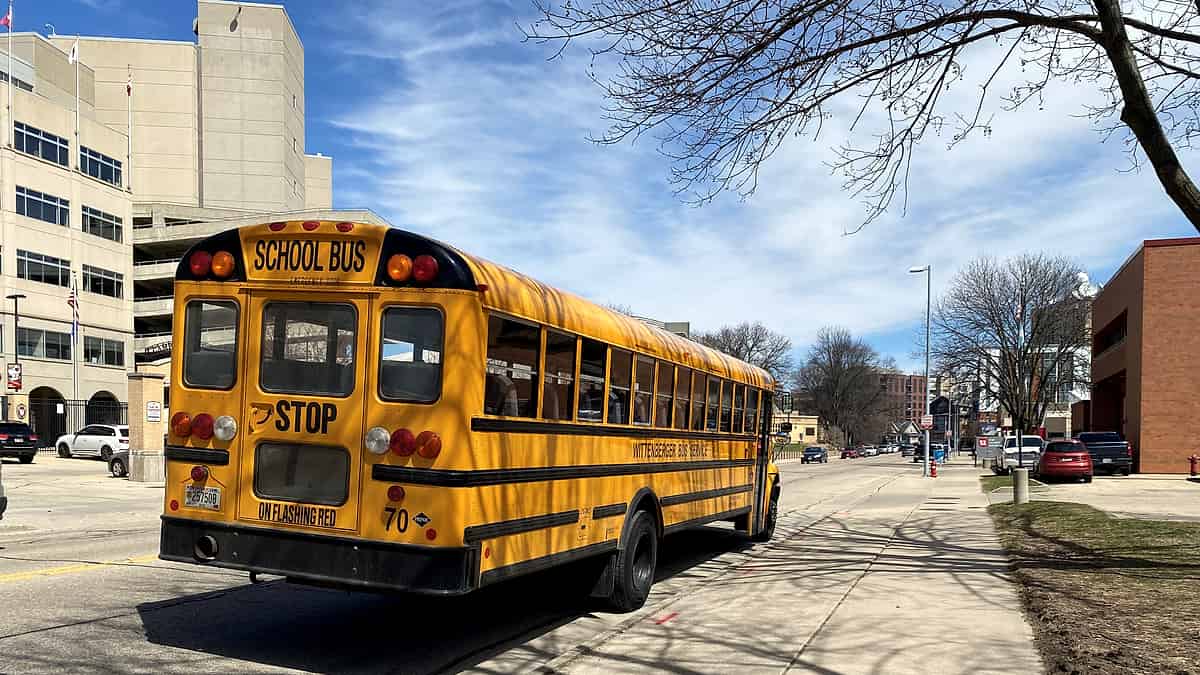
The rule in short
Programs that transport children work under two layers of rules. State licensing sets driver qualifications and record checks, supervision ratios in vehicles, restraint requirements by age and weight, and procedures for counting children on and off. Federal motor vehicle safety standards govern the vehicles themselves, including school bus seating and crash protection and the standards for child restraint systems. Transportation is a listed health and safety topic for state rules.
Two systems govern a program that puts children in a vehicle. State licensing decides who may drive, how many adults must be aboard, what restraints are used and how children are counted. Federal motor vehicle safety standards decide what the vehicle and the seats have to be.
Neither system is optional and neither covers the other. A program can be driving a fully compliant school bus and still be in breach for having one adult aboard, and it can be perfectly staffed in a vehicle that was never built to carry children. Both halves have to be right.
Who is allowed to drive
Driver requirements come from state licensing rules and are broadly consistent in shape. A driver needs a valid license of the class the vehicle requires, which for larger vehicles means a commercial license with the relevant endorsement. Programs are usually required to check driving records at hire and periodically afterwards, and to apply the same background checks required for other staff with access to children.
Several states add a minimum age, a minimum period of licensed driving, medical fitness requirements, and specific training on loading, unloading and emergency evacuation. Those additions are the ones most often missed, because a person who can lawfully drive a van is not automatically qualified to drive it full of four-year-olds.
Insurance follows the same pattern. A personal policy generally does not cover carrying passengers for a business, and a program relying on staff to use their own cars needs to know what its own commercial policy says about that. This is worth asking about directly, because it is the question a program has either answered carefully or never asked at all.
The vehicle, and why the category matters
Federal law defines a schoolbus partly by use: a vehicle designed to carry a stated number of passengers and used significantly to transport students to or from school or school-related events falls into the category. Federal safety standards then impose requirements on that category, including a standard specifically for school bus passenger seating and crash protection, which is where the compartmentalized high-backed seating comes from.
Manufacturers and dealers may not sell new vehicles that fail to comply with the applicable standards. That prohibition is the reason a dealer will refuse to sell a new fifteen-passenger van to a school for student transport, and it is a useful question for a parent to ask: what category is the vehicle, and was it built to carry children.
Beyond the category, state rules add their own vehicle requirements: inspection intervals, maintenance records, first aid equipment, a fire extinguisher, working communication, and in many places a maximum age or mileage before a vehicle is retired from carrying children. These are ordinary licensing items and they appear on inspection reports, so a program's record will show whether they have ever been a problem.
A common and dangerous shortcut is to treat the driver as one of the required adults. Someone at the wheel is not supervising anyone. Most state rules require the ratio to be met by adults other than the driver, particularly for children too young to release their own restraints. A trip planned on the assumption that the driver counts is a trip that will be short of an adult at exactly the moment one is needed.
Restraints, boosters and children who are too small
Child restraint systems are governed by a federal standard covering their construction, performance and labeling, and state law then dictates which children must be in which restraint by age, weight and height. Program rules usually incorporate the state requirement directly, which means a child care van has to carry the same restraints a family car would.
Two complications recur. The first is buses, where the compartmentalized seating design means restraints are handled differently, and where small children may still need a restraint system suitable for a bus. The second is fit: a restraint is only effective when it is the right one for the child and installed correctly in that vehicle, which is why programs that transport regularly usually designate someone trained to check installations rather than relying on whoever loads the vehicle that morning.
Loading and unloading is where most transport injuries happen, and it happens outside the vehicle rather than in it. State rules commonly require children to be loaded and unloaded away from traffic, on the curb side, with an adult positioned between the children and the road, and never to be permitted to cross behind or in front of the vehicle unaccompanied. Premises safety rules already require identification of and protection from vehicular traffic, and the same reasoning applies at the roadside.
Counting children on and off
| Stage | What is usually required | Why it exists |
|---|---|---|
| Before departure | A written list of every child expected on the trip | A count without names cannot reveal who is missing |
| Boarding | Name-by-name check against the list, recorded | Catches a child who never boarded at all |
| Arrival | Second name-by-name check on leaving the vehicle | Catches a child asleep or out of sight |
| Before locking | A physical sweep of every row by a named adult | The only step that finds a child no list accounts for |
| After the sweep | A signed record and confirmation by a second person | Makes the check auditable rather than remembered |
Outings, emergencies and what parents agree to
Field trips usually attract a tighter ratio than the program's indoor requirement, and many state rules also require written parental permission for transportation, a first aid kit and a means of communication in the vehicle, and emergency contact information carried by the supervising adult. Emergency preparedness is itself a required topic for state health and safety rules, covering evacuation, communication and reunification with families.
Permission forms are not waivers, and a signature on a trip slip does not remove a program's duty to supervise properly, which is the subject of waivers a parent signs and whether they hold. Nor does it change the supervision requirements that apply inside the vehicle, which follow the same logic as staff ratios and group sizes.
If something happens during transport, the incident obligations are the same as they would be on the premises, and are set out under reporting an injury or a serious incident. Programs that transport frequently are worth asking two direct questions before enrolling: how many adults travel besides the driver, and who physically walks the vehicle before it is locked. Both answers should come without hesitation, and a program that has to go and find out is a program that has not run the procedure recently enough to remember it.
Points to carry away
- Appropriate precautions in transporting children is a listed health and safety topic for state rules.
- Federal vehicle standards set the requirements for school bus seating and crash protection.
- Child restraint systems are governed by a federal standard covering their design and labeling.
- Supervision ratios apply in a vehicle, and the driver is usually not counted as supervising staff.
- Written headcount procedures on boarding and leaving a vehicle are standard licensing requirements.
Questions readers ask
Why do the rules treat a school bus differently from a van?
Federal law defines a schoolbus by use as well as by design, and federal safety standards impose requirements on buses that ordinary passenger vans do not have to meet, including passenger seating and crash protection. Manufacturers and dealers are prohibited from selling new vehicles that do not comply with the applicable standards for their category. The result is that a purpose-built bus and a fifteen-seat van are not interchangeable, even where a state's own rules would allow either to carry children.
Can a parent volunteer drive children on an outing?
Many states allow it and many programs do it, but the volunteer usually has to meet the same requirements as a staff driver: a valid license of the right class, a driving record check, the program's background checks, and insurance meeting a stated minimum. A volunteer is also usually not countable toward the supervision ratio. Programs that treat a parent driver as an informal favor tend to discover the gap only after an incident, when the insurer asks who authorized the trip.
What should a written headcount procedure actually contain?
A count as children board, a count as they leave, a name-by-name check against a list rather than a count of heads, a physical sweep of the vehicle by a named person before it is locked, a written record signed at the time, and a designated second person who confirms it. The point of each element is redundancy. Every case of a child left in a vehicle involves an adult who was certain the vehicle was empty, which is exactly why a single check is not treated as enough.
Sources
- 45 CFR 98.41 — Health and safety requirementsLists appropriate precautions in transporting children among required health and safety topics.
- 45 CFR 98.44 — Training and professional developmentRequires training on the listed health and safety topics for staff, including transportation.
- 49 CFR 571.222 — School bus passenger seating and crash protectionThe federal safety standard for seating and occupant protection in school buses.
- 49 CFR 571.213 — Child restraint systemsThe federal standard governing child restraint systems and their labeling and performance.
- 49 U.S.C. 30125 — Schoolbuses and schoolbus equipmentDefines a schoolbus for federal purposes and addresses equipment requirements.
- 49 U.S.C. 30112 — Prohibition on selling noncomplying vehiclesBars manufacture, sale or import of new vehicles that do not meet applicable safety standards.
- Childcare.gov — How child care is regulatedExplains that transportation requirements sit within state health and safety licensing rules.
National Attorney Hub is a publication, not a law firm. This article states general rules and cites its sources; it is not advice about any particular case, and the law differs by state and changes over time.
More in Child Care & Camps

Reporting an Injury or a Serious Incident
State licensing rules require programs to notify a parent of an injury, to keep a written record of what happened, and to report serious incidents to the licensing agency within a short period. Federal conditions require states to publish monitoring and inspection results including any health and safety violations, with fatalities and serious injuries prominently displayed, and to publish aggregate annual data on deaths and serious injuries by provider category.

The Child Abuse Registry Check and What It Adds
Background checks for child care staff must include a federal fingerprint check, a national sex offender registry search, and state searches of the criminal repository, sex offender registry and child abuse registry in the state of residence and every state lived in during the preceding five years. The registry search catches substantiated agency findings that never became convictions. States must give notice of a disqualifying result and a process for appealing its accuracy.

Nannies and Care in a Family's Own Home
Child care given in the child's own home is commonly exempt from state child care licensing, and federal rules recognize the same category. What replaces licensing is employment law. A nanny is a domestic service employee entitled to the federal minimum wage and, unless living in the household, to overtime after forty hours. Casual babysitting is narrowly defined and does not cover someone whose vocation is child care. Household employment tax obligations run alongside.