An Interstate Move Compared With a Local One
Two moves can look identical from the driveway and be governed by entirely different systems. The dividing line is whether the shipment crosses a state boundary, and it decides who writes the rules, who enforces them, and what a broken table is worth.

The rule in short
A household goods move that crosses a state line falls under federal regulation: written estimates, a bill of lading with prescribed contents, weight rules, delivery ceilings, valuation choices and a nine-month claim floor. A move entirely inside one state is governed by that state, because federal preemption of state authority over motor carrier prices, routes and services expressly does not apply to intrastate transportation of household goods.
Crossing a state line puts a household move under federal rules. Staying inside one state puts it under that state's rules, and the two systems are not versions of each other.
The federal package is detailed and uniform: a written estimate marked binding or non-binding, a bill of lading with seventeen prescribed items, weighing procedures, a ceiling on what may be demanded at delivery, a valuation choice, a claims process with fixed response times, and a floor of nine months to file. A local move may have all of that, some of it, or almost none, depending on the state. Neither system is automatically better. They are simply different, and knowing which one applies is the first useful thing to establish.
Why the split exists at all
Federal law generally strips states of authority to regulate the prices, routes and services of motor carriers of property. That preemption is what stopped fifty separate freight regimes from re-emerging. But the statute carves out an exception, and the exception is written in plain words: the restriction does not apply to the intrastate transportation of household goods.
The result is deliberate. Congress kept a single national rulebook for freight, and left states free to protect their own residents when the goods being moved are somebody's furniture. That is why local moving is one of the few areas of trucking where a state agency still sets tariffs, licenses carriers and hears consumer complaints.
What the federal rulebook gives a shipper
On an interstate move the carrier must survey the goods or obtain a written waiver, give a written estimate before the bill of lading is signed, and hand over the federal booklet on a shipper's rights. It must issue a bill of lading before taking the goods, prepare an itemized inventory, and let the shipper watch the weighing and demand a reweigh. It must release the shipment on payment of the applicable ceiling, notify the shipper of delays and record having done so, and maintain an arbitration program.
It must also carry a minimum level of cargo security for household goods losses, expressed as an amount per vehicle and a larger amount for losses at any one time and place. Those minimums are modest against the contents of a family home, which is why the valuation choice made on the contract does the real work.
The federal rules also reach the things that happen before anyone signs. Advertising has to carry the carrier's registered name and identification number. Estimates must be given free in their non-binding form. The arbitration summary and the notice about tariff availability have to be furnished before the bill of lading is executed. Together these obligations mean that a great deal of what an interstate mover must do is complete before the truck is even booked, and a company that skipped those steps has left a record of having skipped them.
Most states require intrastate household goods carriers to register or hold a permit, many require filed rates or maximum tariffs, and many run their own complaint and enforcement process through a public utilities commission, a department of transportation or a consumer protection office. Several states model their rules closely on the federal ones. Others regulate lightly and leave the rest to ordinary contract and consumer protection law. The only way to know is to ask which state body licenses movers there.
The two systems side by side
| Question | Interstate move | Move within one state |
|---|---|---|
| Who writes the rules | Federal regulation of household goods carriers | The state, under an express exception to preemption |
| Estimate requirements | Written, marked binding or non-binding, survey or waiver | Whatever the state requires; often a written estimate |
| Contract contents | A bill of lading with seventeen specified items | State-prescribed forms in some states, contract terms in others |
| Liability for damage | Federal standard, with a valuation election | State law, tariff limits and the contract |
| Deadline to claim | No less than nine months by federal floor | Set by state law and the contract terms |
| Where to complain | The federal motor carrier regulator | The state licensing body or consumer protection office |
Working out which one applies to a given move
Start with the routing rather than the addresses. A move from one town to another inside the same state is ordinarily intrastate. A move that crosses a boundary at any point in a continuous movement is ordinarily interstate, including a shipment that is held in another state on the way. Storage that interrupts the movement can change the analysis, which is one reason storage in transit and when it becomes warehousing is worth understanding before agreeing to it.
Then look at the paperwork. An interstate carrier must show its registered legal or trading name, its physical address and its federal identification number on the bill of lading and in its advertising. A company that cannot produce a number, or produces one registered to a different name, is a company worth checking before anything is loaded, which is covered under checking a mover before hiring one.
One category sits outside both systems in practice. Container and trailer services, where the company drops an empty unit, the household loads and unloads it entirely, and the company only drives it, fall outside the statutory definition of a household goods motor carrier. The transportation is still regulated as freight, but the household goods consumer protections built around surveys, inventories and valuation do not attach in the same way. That is a reasonable trade for a lower price, provided the household knows it is making it.
What actually changes for a household
The most important practical difference is the remedy when something goes wrong. On an interstate move the deadlines, the response times and the delivery ceiling are the same in every state, and a shipper can quote them. On a local move, the equivalent protections have to be found in state rules and in the contract itself, so the contract deserves more reading, not less.
The second difference is enforcement. Interstate complaints feed a federal registration that can be suspended. Local complaints feed a state license that can also be suspended, but through a body most people have never heard of. Both routes work. Neither works if the complaint is made to the wrong one.
The third difference is pricing. Federal rules fix how much may be demanded at the door, which is set out under binding and non-binding estimates, and treat withholding goods as its own offense. Many states have equivalents, and some do not, so on a local move the terms agreed in advance are doing more of the work than the regulations are.
Points to carry away
- Federal household goods rules apply to moves in interstate commerce, not to moves within a single state.
- Federal preemption of state motor carrier regulation does not reach intrastate household goods moves.
- Most states run their own registration, tariff and consumer protection rules for local movers.
- Interstate carriers must carry minimum cargo security for household goods losses.
- The claim deadlines and delivery ceilings on a local move come from state law and the contract.
Questions readers ask
What makes a move interstate when both addresses are in the same state?
The test is the character of the transportation rather than the two street addresses. A shipment that begins in one state, travels through or is warehoused in another as part of a continuous movement, and ends back in the first can still be in interstate commerce. It works the other way too: a purely local job performed by a company that also operates across state lines does not become federal because the company is registered nationally. The bill of lading and the actual routing describe the move, not the letterhead.
Does a state license mean a mover can also move goods across a state line?
No. State authority and federal operating authority are different registrations obtained from different bodies, and holding one says nothing about holding the other. A company advertising long-distance moves should have federal registration under its own name and identification number, and the number belongs on its advertising and on the bill of lading. A local permit displayed on a truck door is not evidence of anything about an interstate move.
Which rules apply when a broker arranges the move?
A broker arranges transportation without performing it. On an interstate move a household goods broker has its own federal registration and its own obligations, including limits on the estimates it may provide. The carrier that actually takes the goods is the party bound by the bill of lading and by the delivery and claim rules. On a local move a broker's position depends on the state, and several states regulate arrangers separately from carriers or not at all.
Sources
- 49 U.S.C. 14501 — Federal authority over intrastate transportationPreempts state regulation of prices, routes and services but excepts intrastate household goods.
- 49 U.S.C. 13102 — DefinitionsDefines household goods and the household goods motor carrier that the federal rules apply to.
- 49 CFR Part 375 — Interstate household goods transportationThe consumer protection regulations that apply only to interstate household goods moves.
- 49 U.S.C. 14706 — Liability under receipts and bills of ladingThe federal liability standard and claim period floors on interstate shipments.
- 49 CFR 387.303 — Minimum financial responsibilitySets minimum cargo security amounts for household goods motor carriers.
- FMCSA SAFER Company SnapshotShows whether a company holds federal registration and what identification number it uses.
National Attorney Hub is a publication, not a law firm. This article states general rules and cites its sources; it is not advice about any particular case, and the law differs by state and changes over time.
More in Movers & Moving

The Nine-Month Window to Claim for Lost or Broken Goods
On an interstate household goods move the carrier may not provide a period shorter than nine months for filing a claim, or shorter than two years for bringing a civil action after it gives written notice that the claim is disallowed. A valid claim is a written communication identifying the shipment, asserting liability and demanding a specified or determinable sum. The carrier must acknowledge it within thirty days and pay, decline or make a firm settlement offer within one hundred and twenty.
How the Weight Is Established and Checked
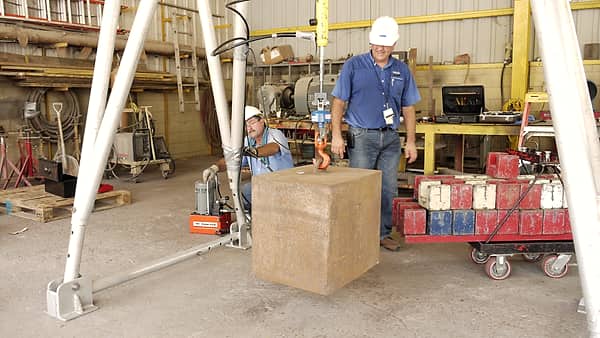
An interstate household goods shipment charged by weight must be weighed either as an origin weigh or a back weigh, with the vehicle fully equipped, nobody aboard, and the fuel tanks handled consistently. The shipper may observe every weighing and, after being told the billing weight and total charges but before unloading begins on an origin weigh, may demand a reweigh. The reweigh weight then governs the freight bill, and weight tickets must accompany the invoice.

Delivery Windows and What Delay Entitles You To
Interstate household goods carriers must provide reasonable dispatch service and must tender the shipment on the agreed delivery date or within the period stated on the bill of lading. When a delay becomes apparent the carrier must notify the shipper by a listed method, at its own expense, and record the notification. Delay is claimable under the federal claims rules, and the carrier must acknowledge a written claim within thirty days and dispose of it within one hundred and twenty.