Interpreters on a Filing and at an Interview
An interpreter certifies something specific: that the whole form was read to the person in a language they speak, and that the person confirmed they understood it. At an interview the role is different again, and one person is expressly excluded from it.
The rule in short
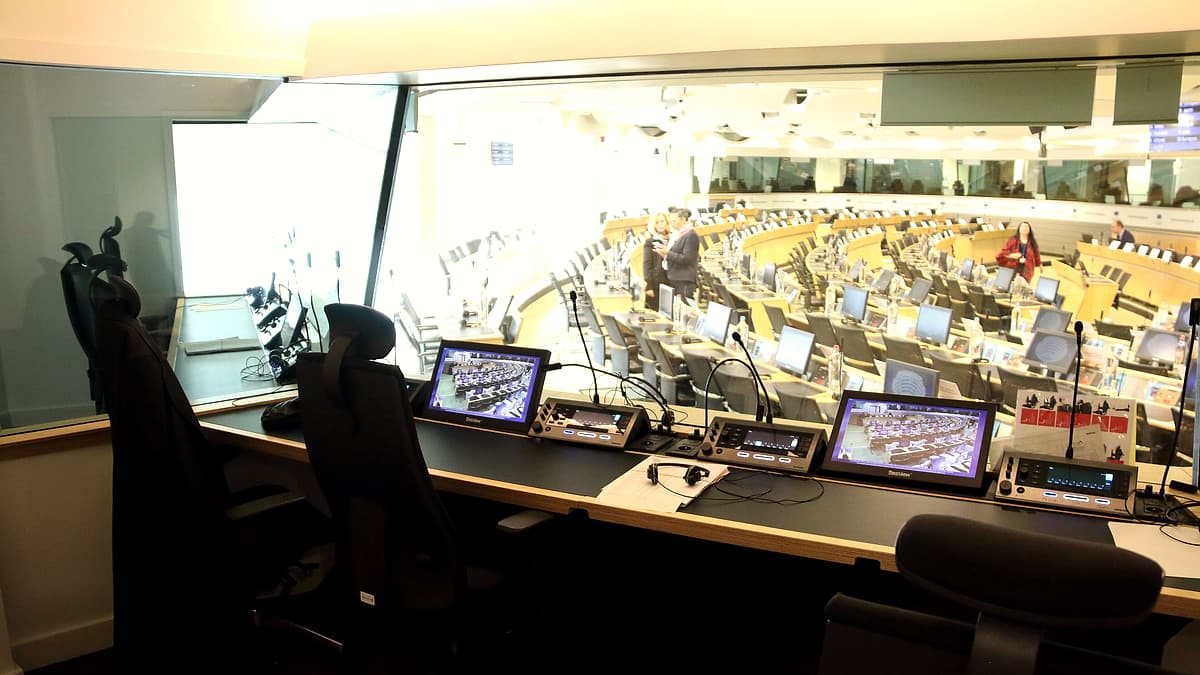
Where a person does not read English well enough to complete a form unaided, an interpreter reads it back in a language the person speaks and signs the interpreter certification, giving their name, contact details and the language used. The certification is about comprehension, not translation of documents. At an interview, an interpreter renders speech in real time, and the applicant's own attorney or accredited representative may not serve in that role.
The interpreter block on a form certifies one thing: that the whole form and its instructions were read back to the person in a language they speak fluently, and that the person confirmed they understood it. At an interview the role changes to rendering speech in real time, and there the applicant's own attorney or accredited representative may not do it.
What the block on the form certifies
The certification is about comprehension rather than paperwork. The interpreter states that they are fluent in English and in the named language, that they read every question, instruction and answer on the form to the person in that language, and that the person confirmed understanding before signing.
The interpreter also gives their name and contact details and signs the block themselves. They do not sign the applicant's line, and a signature by an interpreter in place of the person filing is expressly not accepted. Each declaration on the form belongs to the person making it.
The block is completed whenever it applies, not only when the person speaks no English at all. Someone who can hold a conversation but cannot follow a legal question in English is in exactly the situation the certification exists for. Leaving it blank because the person "gets by" produces a form that claims a comprehension that did not happen.
Reading back means what it says. The interpreter goes through the questions, the instructions and the answers as completed, in the other language, and pauses where something is unclear. A summary of the general effect of the form is not a reading of it, and the certification does not describe a summary.
The moment for that reading is before signature, not after. A person who signs first and hears the form explained afterward has certified under penalty of perjury to content they had not yet understood, which is precisely the situation the block exists to prevent.
Three roles that are often confused
Interpreting a form, translating a document and preparing a form are separate functions with separate declarations. One person can do all three, and if they do, all three blocks are completed. Doing one does not imply the others, and none of them makes a person a representative of record with the standing that comes with that position.
| Role | What it covers | What it certifies |
|---|---|---|
| Interpreter on the form | Reading the form and instructions aloud in another language | Fluency, that everything was read back, and that it was understood |
| Translator of a document | Producing a written English version of a foreign-language document | That the translation is complete and accurate, and that the translator is competent |
| Preparer of the form | Completing the fields from information the person supplied | That the form was completed at the person's request from their information |
| Interpreter at an interview | Rendering questions and answers in real time | Nothing on the form; the record is made by what is said in the room |
The written translation rules are stricter and more specific than anything on the interpreter block, and they are set out in who may translate a document. The preparer role and its limits are covered in form preparers who are not representatives.
Agency guidance is unambiguous that the attorney or accredited representative of the person cannot serve as the interpreter during the interview, and that officers cannot make exceptions for good cause. A representative who arrives expecting to do both will be doing one, and a filer who planned around that arrives at the interview with no interpreter at all.
The interview itself
In the room the interpreter is not certifying a document; they are creating the record. Everything said passes through them, and what the officer writes down is what they rendered. That makes accuracy more consequential than at any other point in the process, because statements made at an examination become part of the administrative record and are read against everything else in the file.
Three qualities matter. Neutrality, so the interpreter renders rather than answers. Accuracy, including a willingness to say when something was not understood. And stamina, since interviews can run long and precision fades. A person who is emotionally involved in the events being discussed struggles with all three, however good their language is and however much they want to help.
Pace is part of accuracy. An interpreter who is keeping up will interrupt to ask for a repetition, will render a long answer in segments, and will not compress three sentences into one. An officer waiting through those pauses is getting a better record than one moving briskly through a session where nobody has stopped for twenty minutes.
Where a representative is present, they may examine and cross-examine, introduce evidence, make objections that are entered on the record, and submit briefs. Those are active functions that cannot be performed while simultaneously interpreting, which is the practical reason behind the rule as much as the formal one. What else an appearance changes is set out in the notice of appearance and what it changes.
Choosing and preparing an interpreter
Some interviews are conducted by an officer who speaks the language, and some offices arrange interpretation themselves. Neither can be assumed. The notice states what the office expects, and an applicant who arrives without an interpreter because they assumed one would be provided may find the interview rescheduled, with all the delay that carries.
Pick someone with no stake in the outcome and no role in the facts. Confirm they speak the right variety of the language, since a shared language with a different regional register produces subtle errors in exactly the details officers focus on. Tell them in advance that their job is to render, not to explain, and that they should say plainly when they did not catch something rather than filling the gap with a guess.
Practical arrangements matter as much. Confirm attendance well before the date, arrange a substitute, and check on the notice whether the interview will be conducted in person or remotely, since a remote interview places extra demands on an interpreter working over a connection. Test the audio in advance if the session is remote.
Where the case rests substantially on the applicant's own account rather than on documents — the pattern discussed in letters of support and what an officer does with them — interpretation quality can decide the outcome. That is the setting in which an interpreter certification immigration counsel is worth engaging early, because arranging a competent, disinterested interpreter is part of preparing the case rather than an errand on the morning of the interview.
Points to carry away
- The interpreter block certifies that the entire form and its instructions were read back in a language the person speaks fluently.
- The interpreter gives their name, contact details and the language used, and signs the certification themselves.
- Interpreting a form is a different role from translating a document and from preparing the form.
- At an interview, the applicant's own attorney or accredited representative may not act as the interpreter.
- One person may occupy more than one role, but each role has its own declaration on the form and each must be completed.
Questions readers ask
Does the interpreter need a qualification?
The form does not ask for one. It asks the interpreter to certify fluency in English and in the named language, and to confirm that the whole form and its instructions were read back and understood. That is an assertion the interpreter makes on their own account, under the same declaration everyone else on the form signs. Someone whose command of either language is shaky should not sign it, because the certification is not about getting by in conversation but about conveying legal questions accurately.
Can a family member interpret at an interview?
It is often permitted and often unwise. A relative who is emotionally involved, or who features in the events being discussed, tends to answer rather than interpret, to soften an answer, or to explain what the person meant. Officers notice that quickly, and it can raise doubts about testimony that was actually fine. Where the interview matters and the stakes are high, a disinterested interpreter with no involvement in the facts produces a cleaner record.
What happens if an interpreter gets something wrong in the room?
Say so immediately, before the interview moves on. A correction made at the time is recorded as a correction. A discrepancy discovered afterward looks like an inconsistency, and inconsistencies the filer supplied can be relied on later without any advance disclosure. Anyone who realizes mid-interview that an answer was rendered incorrectly should stop and say that the interpretation was wrong, then give the correct answer, rather than hoping the transcript reads sensibly.
Sources
- USCIS Policy Manual, Volume 1, Part B, Chapter 5 — Interpreters and PreparersStates the interpreter and preparer requirements and bars a representative from interpreting at the interview.
- 8 CFR 103.2 — Submission and adjudication of benefit requests (Cornell LII)Paragraph (b)(3) covers translations of documents, a role distinct from interpreting a form.
- USCIS Policy Manual, Volume 1, Part B, Chapter 2 — SignaturesConfirms that an interpreter may not sign in place of the person filing.
- 8 CFR 292.5 — Service upon and action by attorney or representative of record (Cornell LII)Sets out what a representative may do at an examination, which is why they cannot also interpret.
- USCIS — Form I-765 instructionsA worked example of the interpreter certification as it appears on a form.
- USCIS Policy Manual, Volume 1, Part E, Chapter 2 — Record of ProceedingExplains that statements made at an examination become part of the administrative record.
National Attorney Hub is a publication, not a law firm. This article states general rules and cites its sources; it is not advice about any particular case, and the law differs by state and changes over time.
More in Immigration Filings
A Payment That Does Not Clear After Acceptance
If a remittance is not honored by the institution on which it is drawn, no receipt is issued and any receipt already issued is void, with the request losing its receipt date. A payment returned for insufficient funds is resubmitted once; a second failure allows rejection or denial. A payment returned for any other reason, including a stop payment, is not resubmitted at all. Where the request had been approved, the approval may be revoked on notice and other fees are not refunded.

Checking a Case and Asking About a Delay
A person may create a service request where a case is outside normal processing time, where a notice, card or document was not received, where an accommodation is needed, or where a typographic error requires correction. Requests are recorded and routed to the office holding the file, categorized by urgency and completed on a first-in, first-out basis, with a general resolution goal of fifteen business days. Self-service options resolve many questions without a request at all.

A Motion Compared With an Appeal After a Refusal
A motion is filed with the office that made the latest decision, generally within thirty days, and asks that office to reopen on new facts or reconsider on the law. An appeal is submitted on the prescribed form with the required fee, complete with any brief, within thirty days after service. The deciding official reviews the appeal first and may take favorable action within forty-five days before forwarding it. An untimely appeal that meets the motion requirements is treated as a motion.